
Dr. Stephen Petteruti Published Research
Dr. Stephen Petteruti is a board-certified family physician, author, and clinical researcher with over 30 years of experience in family medicine, preventive care, anti-aging medicine, men's health, and longevity.
Dr. Petteruti's published research investigates the effects of long-term intravenous chelation therapy on two measurable outcomes: coronary artery calcium scores and provoked urinary lead levels.
Both studies were published in Cureus, an open-access, peer-reviewed medical journal. The findings contribute clinical data to ongoing research involving toxic metals, cardiovascular risk, coronary calcification, and EDTA-based chelation therapy.
These studies yielded measurable findings; however, both were small observational investigations. Neither study demonstrated that chelation therapy prevents heart attacks, strokes, cognitive decline, cancer, or mortality.
Research Areas
Dr. Petteruti’s published research focuses on:
Long-term calcium EDTA-based IV chelation therapy
Coronary artery calcium score progression
Accumulated lead reduction
Toxic metals and cardiovascular health
Preventive and integrative medical strategies
Practical treatment schedules used in clinical practice

Coronary Calcium Score Research
Reduction of Calcium Scores Using Intravenous Chelation: A Retrospective Pilot Study
Published in Cureus in 2023, this retrospective pilot study examined changes in coronary artery calcium scores following long-term, intermittent IV chelation therapy.
Dr. Petteruti conducted the research with Vincent Frazzini, MD, a board-certified radiologist.
Why the Study Was Conducted
A coronary artery calcium scan measures calcified plaque within the coronary arteries. The result is reported as an Agatston score.
Higher calcium scores are associated with greater cardiovascular risk. Calcium score progression has also been linked to future cardiovascular events.
Traditional cardiovascular care addresses cholesterol, blood pressure, glucose regulation, smoking, weight, nutrition, and physical activity. These strategies reduce cardiovascular risk, but established coronary calcium scores often continue to rise.
The study aimed to assess changes in coronary calcium scores following several years of intermittent calcium EDTA-based intravenous chelation therapy.
Study Design
The study included 10 asymptomatic patients with positive coronary artery calcium scores.
None of the patients had a known history of myocardial infarction, coronary artery disease, or other diagnosed cardiovascular disease.
Each participant received an initial coronary calcium scan, completed a series of intermittent IV chelation treatments, and underwent a follow-up scan approximately three years later.
All scans were performed at the same imaging center with the same CT equipment, software, and scoring method. The same board-certified radiologist interpreted the scans and did not know the patients’ chelation status.
Participants received an average of 26.9 infusions over an average of 37.9 months.
Study Results
All 10 patients had lower coronary calcium scores at follow-up.
The average initial coronary calcium score was 610.2 Agatston units. The average follow-up score was 443.3.
This represented an average reduction of 27.38%.
No adverse events were recorded during the study period. There were no reported myocardial infarctions, strokes, hospitalizations, or changes from baseline creatinine levels.
The study was not designed or large enough to determine whether treatment prevented cardiovascular events.
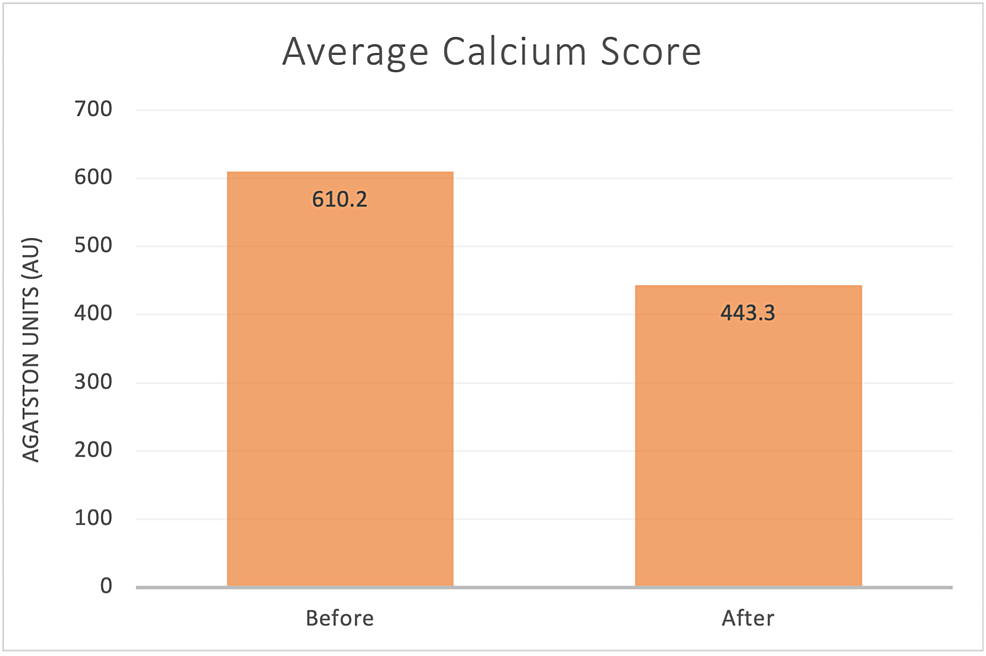
Average coronary artery calcium scores before and after long-term IV chelation therapy. Source: Petteruti SJ, Frazzini V. Cureus. 2023;15(9). Used under CC BY 4.0.
What the Findings Mean
The study found an association between long-term, intermittent calcium EDTA-based IV therapy and lower follow-up coronary calcium scores.
The study did not identify which infusion ingredient contributed to the observed changes. Calcium EDTA is known to reduce accumulated lead, a factor associated with cardiovascular toxicity. The infusions also included antioxidants and micronutrients.
The study evaluated the complete infusion protocols rather than each ingredient separately.
A reduction in a coronary calcium score also does not prove a corresponding reduction in heart attacks, strokes, or cardiovascular mortality. The post-treatment calcium scores remained within ranges associated with elevated cardiovascular risk.
Larger controlled trials are needed to determine whether these findings are reproducible and whether calcium score reductions affect clinical outcomes.
Study Limitations
This was a retrospective pilot study involving 10 patients.
There was no placebo group, and the participants served as their own controls. Treatment frequency and duration varied, and two infusion formulas were used.
The participants also lacked ethnic diversity and were generally proactive about their health. These factors limit how broadly the results should be applied.
Chelation therapy is not FDA-approved for preventing cardiovascular disease and should not replace established cardiovascular therapies.
Read the Published Study
Petteruti SJ, Frazzini V. Reduction of calcium scores using intravenous chelation: a retrospective pilot study. Cureus. 2023;15(9).
DOI: https://doi.org/10.7759/cureus.44657
Read The Full StudyLead Reduction Research
Reduction of Lead Levels Following Long-Term, Intermittent Calcium EDTA-Based IV Chelation Infusions
Published in Cureus in 2020, this prospective experimental cohort examined whether intermittent calcium EDTA-based IV chelation therapy was associated with lower provoked urinary lead measurements.
Why the Study Was Conducted
Lead is an environmental toxin with no beneficial biological role.
Exposure does not occur only through occupational accidents or acute poisoning. Low-level exposure also occurs through older buildings, soil, water systems, food, imported products, and the broader environment.
Once absorbed, some lead is excreted. The remainder becomes stored in bone and soft tissue, where it could remain for decades.
Research has associated lead exposure with cardiovascular disease, hypertension, cognitive decline, and increased mortality.
The study aimed to determine whether a practical, intermittent calcium EDTA protocol could reduce measured lead levels without necessitating an intensive treatment schedule.
Study Design
The study included 15 healthy, asymptomatic adults who voluntarily enrolled in an IV chelation program.
None had a history of occupational heavy metal exposure, known lead poisoning, diabetes, or significant kidney disease.
Participants received calcium EDTA followed by a six-hour urine collection. The resulting provoked urinary lead measurement was used in the study as an estimate of accumulated lead.
The participants completed an average of 14 chelation infusions over an average treatment period of 24.2 months.
Each participant underwent repeat provocative urinary lead testing after completing the treatment series.
Study Results
All 15 participants had lower provoked urinary lead measurements at follow-up.
The average measurement declined from 28.67 mcg/gCr before treatment to 17.4 mcg/gCr after treatment.
This represented an average reduction of approximately 39%.
The statistical analysis produced a P value of 0.00004.
None of the participants reported side effects during or after treatment. Average creatinine levels did not increase during the study.
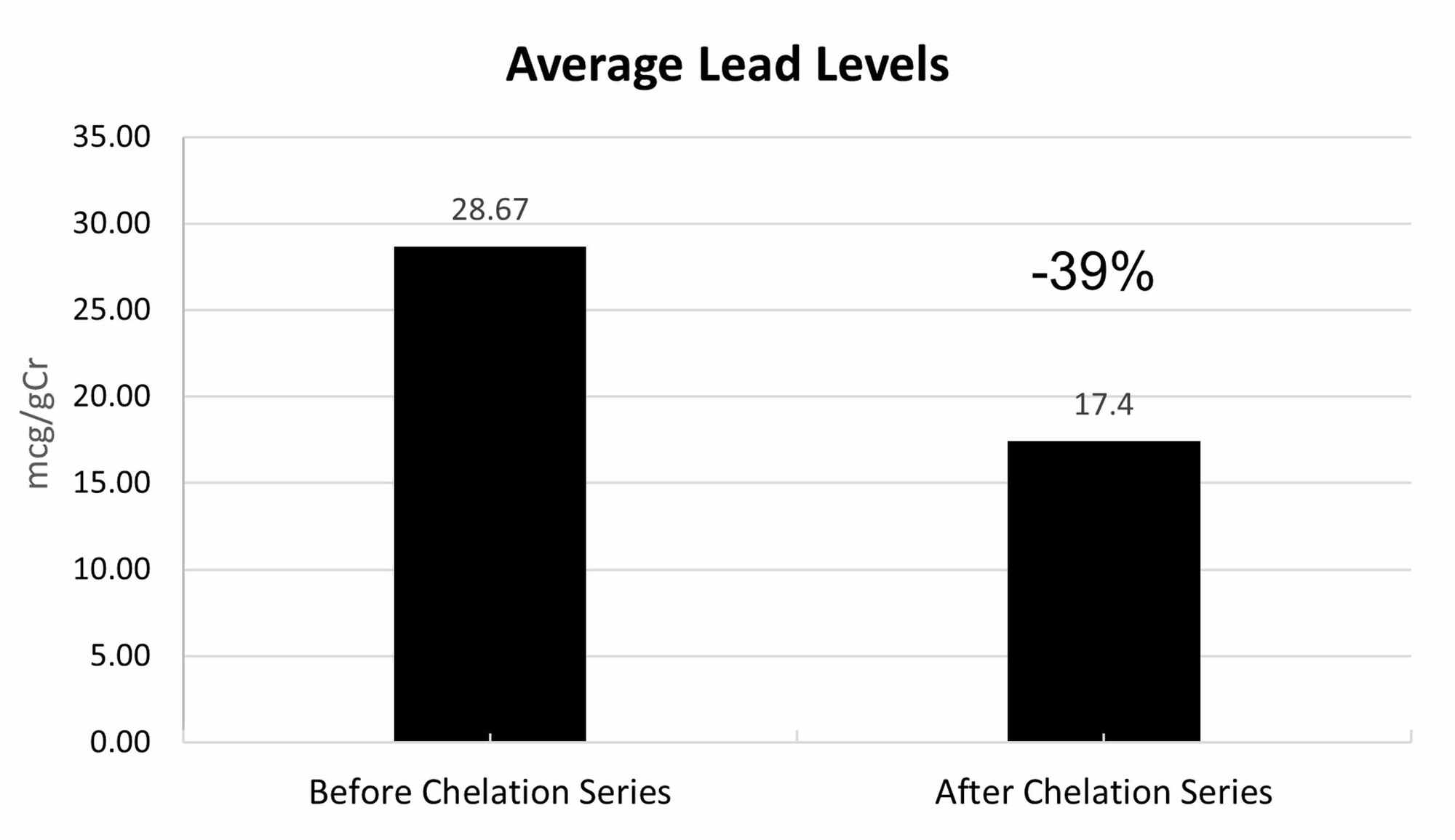
Average provoked urinary lead measurements before and after long-term, intermittent calcium EDTA-based IV chelation therapy. Source: Petteruti S. Cureus. 2020;12(11). Used under CC BY 4.0.
What the Findings Mean
The study demonstrated an association between intermittent calcium EDTA-based IV therapy and lower provoked urinary lead measurements in all 15 participants.
It did not establish that lowering these measurements reduces cardiovascular disease, dementia, cancer, or mortality.
The infusion protocol also included vitamin C, magnesium, B vitamins, and glutathione. These ingredients were not evaluated separately, so the findings apply to the protocol as a whole.
Study Limitations
This was a small study without a separate control group. Each participant served as his or her own comparison.
The number and timing of infusions varied, and the participants lacked ethnic diversity.
Provoked urinary lead testing is an indirect measurement used in the study to estimate accumulated lead. The research did not measure lead directly in bone or tissue.
The study also did not evaluate long-term disease outcomes. Larger controlled studies are needed to determine whether reducing measured lead produces clinical health benefits.
Read the Published Study
Petteruti S. Reduction of lead levels in patients following a long-term, intermittent calcium ethylenediaminetetraacetic acid (EDTA)-based intravenous chelation infusions: a prospective experimental cohort. Cureus. 2020;12(11).
DOI: https://doi.org/10.7759/cureus.11685
Read The Full StudyWhy This Research Matters
Clinical observations should be documented, measured, and subjected to scientific review.
These studies were published to provide clinical data on outcomes observed during long-term patient care. The objective was not to assert definitive conclusions, but to document measurable findings and identify questions for future research.
The coronary calcium study found lower follow-up scores in all 10 participants.
The lead study found lower follow-up measurements in all 15 participants.
Both studies were preliminary. Together, they support further research into calcium EDTA-based IV chelation, toxic metal reduction, coronary calcification, and long-term cardiovascular outcomes.
Frequently Asked Questions
What research has Dr. Stephen Petteruti published?
Dr. Petteruti has published clinical research examining coronary calcium score reduction and provoked urinary lead reduction following long-term, intermittent calcium EDTA-based IV chelation therapy.
Were the studies peer reviewed?
Yes. Both papers were published in Cureus, an open-access, peer-reviewed medical journal.
Did the studies prove that chelation prevents heart disease?
No. The studies measured changes in coronary calcium scores and provoked urinary lead. They were not designed to prove reductions in heart attacks, strokes, cardiovascular mortality, or other disease outcomes.
Did every participant improve?
Every participant had a lower follow-up measurement for the primary outcome studied. All 10 participants in the coronary calcium study had lower calcium scores. All 15 participants in the lead study had lower provoked urinary lead measurements.
Does a lower coronary calcium score mean cardiovascular risk has been eliminated?
No. Participants’ follow-up scores remained within ranges associated with cardiovascular risk. A lower score should not be interpreted as the absence of coronary disease or future risk.
Is chelation therapy FDA-approved to prevent cardiovascular disease?
No. Chelation therapy is not FDA-approved for cardiovascular disease prevention. It should not replace established cardiovascular evaluation, lifestyle measures, or prescribed treatment.
About Dr. Stephen Petteruti
Dr. Stephen Petteruti is a board-certified family physician with more than 30 years of experience. His clinical work focuses on men’s health, anti-aging medicine, longevity, hormone optimization, preventive care, and strategic prostate cancer management.
He is the author of Fight Cancer Like a Man and Vitamized Health and hosts the Intellectual Medicine Podcast.
Learn More About Dr. Stephen Petteruti