Supplements for Prostate Cancer: What Works, What’s Hype, and What Could Be Harmful
Jun 22, 2026A physician’s perspective on the evidence behind common prostate supplements, misleading marketing claims, potential medication interactions, and what deserves a place in your health plan.
By Stephen Petteruti, DO
Board-Certified Family Physician | Founder, Intellectual Medicine | Last reviewed June 2026
If you have received a diagnosis of prostate cancer or are experiencing a rising PSA, you have likely been advised to consider various supplements. These may include vitamin D, lycopene, broccoli extract, melatonin, N-acetylcysteine (NAC), pomegranate, pygeum, and nettle root. As the list of recommended supplements expands, so does the potential for confusion.
I frequently encounter similar questions from men: Which supplements are truly beneficial? Which are primarily marketing hype? Which are ineffective, and which may even be detrimental? This confusion is understandable, as the supplement landscape for prostate cancer is crowded, complex, and often misleading. Individuals are often presented with unsubstantiated promises, cautioned against non-FDA-approved options, and left to discern credible science from aggressive marketing.
My approach to this topic is distinct. My guiding principle is straightforward: supplements are neither miracles nor cures; they are tools. As with any tool, their effectiveness depends on how thoughtfully they are utilized.
I do not focus on trends or hype; my priority is improving biological function. This distinction is important. If a treatment diminishes energy, weakens the body, or reduces quality of life, it is essential to critically evaluate its true benefit.
It is important to define what constitutes success in treatment.
The objective should not be treatment for its own sake. Instead, the focus should be on preserving vitality, maintaining strength, supporting metabolic health, and fostering an internal environment conducive to well-being. When used strategically and thoughtfully, supplements can contribute meaningfully to these goals.
Cancer Starts Long Before You Know It
A common misconception about prostate cancer is the belief that it begins only when it becomes visible on imaging or detectable through blood work. In reality, prostate cancer initiates at the cellular level, often years before it is apparent on MRI, PSMA PET imaging, or laboratory testing. By the time PSA levels rise or imaging reveals abnormalities, the biological environment conducive to cancer development may have already been evolving for years.
This understanding should fundamentally alter how men approach treatment. The objective should not be to react solely to laboratory values or to initiate intervention immediately upon detecting abnormalities. Instead, the focus should be on understanding the biological environment that permits cancer growth and determining how to make that environment less conducive to progression. This requires looking beyond the tumor itself and considering factors that influence cancer behavior, such as inflammation, oxidative stress, mitochondrial function, metabolic health, immune surveillance, and hormonal balance.
This context highlights the importance of a serious discussion regarding supplements. Supplements should not be viewed as magic solutions or miracle cures, but rather as tools. When used judiciously, supplements can support the biological systems that influence cancer behavior. The aim is not solely to attack cancer, but to create an internal environment that fosters strength, resilience, and long-term vitality, thereby making cancer progression less likely.
Why Supplement Research Often Falls Short
A frequent criticism of supplements is the lack of large randomized clinical trials. While this concern appears valid, the reality is more complex. Although robust evidence is essential and should be prioritized, the absence of large clinical trials does not necessarily indicate that a supplement lacks value or biological relevance.
Pharmaceutical companies are unlikely to invest significant resources in studying compounds such as broccoli powder, melatonin, or pomegranate extract when there is no opportunity for patent protection or substantial financial return. This situation creates a significant blind spot in modern medicine. Many compounds with meaningful biological potential are overlooked not because they are ineffective, but because there is insufficient economic incentive to validate their benefits through large-scale trials.
For this reason, I employ a different framework when evaluating supplements. Rather than focusing exclusively on pharmaceutical-backed studies, I consider more practical and biologically relevant questions. Does the compound make biological sense? Does it affect pathways involved in prostate cancer progression? Does it improve oxidative balance, reduce inflammation, enhance immune function, or influence cancer metabolism?
This framework is more effective because it shifts the discussion from marketing claims to biological relevance. The essential question is not whether a supplement has received substantial funding or extensive study, but whether it meaningfully supports the biological systems that influence cancer behavior and long-term health.
The Purpose of the Dr. Petteruti Protocol
The primary objective of the Dr. Petteruti Protocol is not limited to attacking cancer. This approach differs from conventional paradigms by emphasizing disease containment while preserving vitality, physiological function, and long-term quality of life. The protocol shifts focus from indiscriminate destruction of cancer cells to protecting biological systems that support strength, resilience, and sustained health.
Rather than concentrating exclusively on cancer elimination, the protocol aims to improve the biological environment that enables cancer survival and progression. This includes supporting metabolic health, enhancing mitochondrial function, reducing inflammation, strengthening immune surveillance, and protecting systems responsible for energy, muscle mass, resilience, and recovery. The central question shifts from solely attacking cancer to determining how to render the body less conducive to cancer progression while maintaining the vitality essential for quality of life.
Within this framework, each supplement is evaluated according to specific criteria: the presence of a logical biological mechanism, its impact on pathways relevant to prostate cancer progression, supporting evidence for its use, adequate dosing, and suitability within a practical and sustainable long-term strategy.
Not all supplements are included in the protocol. Increasing the number of products does not necessarily yield better outcomes. Excessive supplementation can lead to confusion, unnecessary costs, and reduced adherence. Precision and strategic selection are essential. The objective is to select appropriate interventions for specific biological targets, rather than maximizing the number of supplements.
Vitamin D and Immune Function
Vitamin D warrants particular attention due to its roles beyond bone health. It influences immune regulation, inflammation, cellular signaling, and hormone balance, all of which are relevant to prostate health and cancer biology. Vitamin D deficiency is prevalent, particularly among aging men, and has been associated with poorer health outcomes across various conditions, including cancer. Although vitamin D is neither a cure nor a stand-alone treatment, optimizing its levels supports broader biological systems involved in immune function and cellular protection. Within my protocol, vitamin D is considered foundational for overall physiological support, rather than an arbitrary addition.
Pygeum Bark and Prostate Health
Pygeum bark has a longstanding history of use in supporting prostate health, particularly for men experiencing benign prostate enlargement and associated urinary symptoms. Its primary benefits are attributed to anti-inflammatory properties and its capacity to improve urinary flow, decrease nocturnal urination, and enhance overall urinary comfort. Many individuals managing prostate cancer also contend with prostate enlargement and lower urinary tract symptoms. While improving urinary function does not directly address cancer, it can substantially enhance quality of life, sleep, and daily functioning, which are critical for preserving vitality.
Nettle Root and Urinary Support
Nettle root is another supplement I frequently employ to support prostate and urinary health. Research has primarily focused on its efficacy in alleviating urinary symptoms associated with benign prostatic hyperplasia, such as weak urinary stream, incomplete bladder emptying, and increased frequency. I consider nettle root a practical intervention for men whose urinary symptoms disrupt sleep, recovery, and overall quality of life. Similar to pygeum, nettle root is not regarded as a cancer treatment, but rather as a component of a comprehensive strategy, as symptom management and quality-of-life preservation are essential aspects of long-term prostate health.
Alpha-Lipoic Acid and Cancer Metabolism
Alpha-lipoic acid is notable for its potential role in cellular metabolism and oxidative balance. Although commonly regarded as an antioxidant, its functions extend beyond this characterization. Alpha-lipoic acid supports mitochondrial energy production through its interaction with pyruvate dehydrogenase, a key enzyme in cellular metabolism. Cancer cells frequently depend on altered metabolic pathways, particularly aerobic glycolysis, to sustain rapid growth and survival, a phenomenon known as the Warburg effect. Research indicates that alpha-lipoic acid may modulate these metabolic pathways by enhancing mitochondrial function and disrupting cancer cell metabolism. In the context of prostate cancer, emerging studies suggest that alpha-lipoic acid may reduce cancer cell growth, migration, and invasion. While alpha-lipoic acid is not a cure for prostate cancer, it demonstrates meaningful biological relevance. Rather than serving as a generic antioxidant, it functions as a metabolic agent that may affect oxidative stress, mitochondrial activity, and cancer metabolism, all of which are important for creating an internal environment less conducive to cancer progression.
Melatonin Is More Than a Sleep Supplement
Melatonin is commonly perceived as a sleep supplement, yet its biological effects extend well beyond circadian regulation. Melatonin modulates immune signaling, mitochondrial function, antioxidant defense, and cellular protection, and it also influences matrix metalloproteinases (MMPs), enzymes involved in tissue breakdown, invasion, and metastasis. These mechanisms have prompted investigation into melatonin as a potential adjunct in prostate cancer management, particularly in advanced disease. Although clinical data remain limited, one retrospective study reported that melatonin use in combination with hormone and radiation therapy was associated with improved overall survival in men with poor-prognosis prostate cancer. While melatonin should not be considered a standalone cancer treatment, its impact on oxidative stress, immune function, and tumor-related pathways warrants further research.
Broccoli Powder and Sulforaphane
Broccoli powder has attracted attention primarily due to sulforaphane, a compound with significant biological activity in detoxification and cancer-related pathways. Sulforaphane has demonstrated promising anti-cancer effects in preclinical research, particularly through its capacity to support detoxification enzymes, reduce oxidative stress, and modulate inflammatory signaling. These properties make it one of the most compelling food-derived compounds for prostate health. Broccoli-derived compounds exemplify how targeted nutrition can influence biological processes in clinically relevant ways.
DIM and Hormone Metabolism
Diindolylmethane, or DIM, is best known for its effects on hormone metabolism and cellular regulation. It helps influence estrogen metabolism and may support healthier hormonal balance, which matters because hormonal signaling plays a significant role in prostate health. I emphasize that DIM is most useful when viewed as part of a broader strategy. Supplements rarely work in isolation. Their value often comes from how they interact with other pathways involving metabolism, inflammation, and hormone regulation.
Lycopene and Prostate Protection
Lycopene, a compound predominantly found in tomatoes, is frequently discussed in the context of prostate health due to its well-documented antioxidant properties and potential protective effects on prostate tissue. Research indicates that lycopene may reduce oxidative stress and modulate biological pathways relevant to prostate health and disease progression. Although lycopene should not be considered a stand-alone intervention, it is widely recognized as a valuable nutritional component in prostate support protocols.
N-Acetylcysteine and Glutathione Support
N-acetylcysteine (NAC) supports glutathione production, a critical antioxidant defense in the body. Oxidative stress significantly contributes to aging, chronic inflammation, and cancer progression. When oxidative stress surpasses the body’s protective capacity, the internal environment becomes more conducive to disease development. Enhancing glutathione production reinforces the body’s primary defense mechanisms, which underscores the inclusion of NAC in many longevity and cancer-support protocols.
Pomegranate Extract
Pomegranate extract is notable for its antioxidant and anti-inflammatory properties, especially regarding prostate health. I recommend pomegranate extract over pomegranate juice, as the latter often contains excessive sugar and lacks therapeutic concentrations of active compounds. Pomegranate extract offers a concentrated source of beneficial constituents without unnecessary sugar, making it a more practical option for individuals concerned with both metabolic and prostate health.
Free Radicals Are Not the Enemy
A key concept I address is oxidative stress, an area that is frequently misunderstood. Free radicals are not inherently harmful; they are a normal byproduct of metabolism and cellular function. Problems arise when free radical production surpasses the body’s capacity to maintain equilibrium. This imbalance becomes more prevalent with aging, chronic inflammation, metabolic dysfunction, and suboptimal lifestyle choices, thereby increasing the risk of cancer progression. The objective is not to eliminate free radicals entirely, as this is neither biologically feasible nor necessary. Instead, the focus should be on restoring balance by supporting the body’s natural defense mechanisms and mitigating factors that contribute to excessive oxidative stress. This approach offers a more accurate and effective framework for understanding cancer risk.
The Bigger Question Most Men Ignore
Ultimately, the central question is: how should one approach life while managing prostate cancer? Conventional prostate cancer care often emphasizes intervention at the expense of vitality, energy, strength, and overall quality of life. I challenge this paradigm, as treatments that diminish energy, reduce muscle mass, and compromise quality of life warrant critical evaluation regarding their true benefit. My guiding principle is straightforward: prioritize protecting energy, strength, and vitality.
This perspective extends beyond the use of supplements. No supplement can substitute for personal responsibility, discipline, or commitment. The objective is not perfection, but rather the consistent adoption of behaviors that promote strength, resilience, and long-term vitality. Health should be viewed as an ongoing responsibility, not a rescue mission. Supplements are not curative and should not replace comprehensive medical care. However, when used strategically with appropriate rationale and dosing, they can serve as valuable adjuncts for supporting prostate health, immune function, and overall physiological well-being.
Ultimately, the focus should not be on fear or sensationalism, but on strategic decision-making. This is the approach I advocate for men considering supplements in the context of prostate cancer.
If you want a deeper breakdown of the supplements discussed here, including the science, dosing, and how I evaluate each one, watch the full Podcast episodes below:
Supplements for Prostate Cancer: What Works, What’s the Hype, and What’s Dangerous (Part 1)
Supplements for Prostate Cancer: What Works, What Doesn’t, and What’s Harmful (Part 2)
The Truth About Prostate Supplements: My A – C Grades on What Really Works
If you are looking for a simpler way to implement many of these strategies, you can also learn more about my comprehensive prostate support formula here: Petteruti Prostate Vitality (PPV)
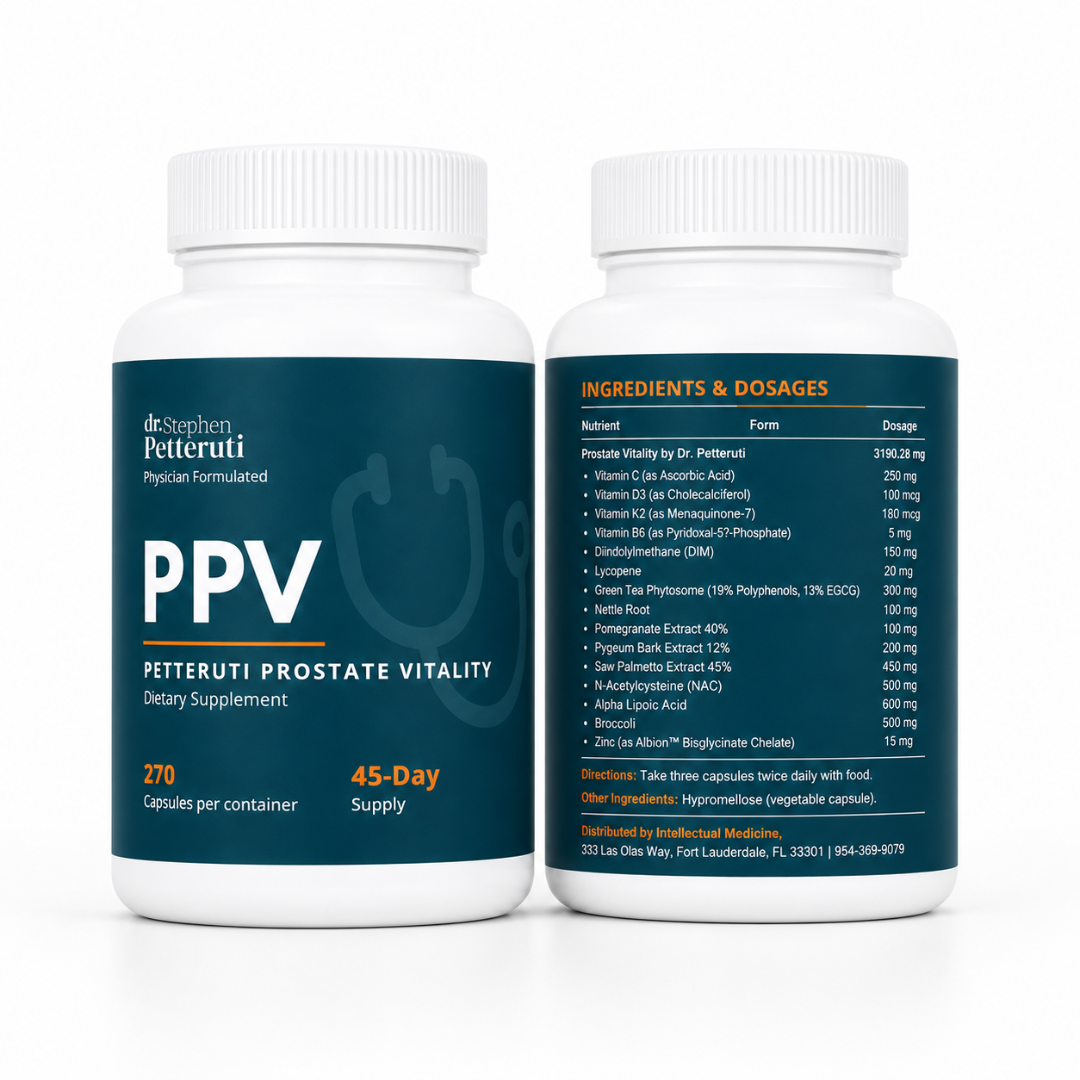
If you are ready to take a more strategic approach to managing prostate cancer and protecting your long-term vitality, schedule a consultation here: Intellectual Medicine Consult
About Dr. Stephen Petteruti
Dr. Stephen Petteruti is a physician focused on men’s health, hormone optimization, longevity, and prostate cancer care. His approach challenges conventional thinking by focusing on root causes, metabolic health, and long-term vitality. His goal is not simply to help patients live longer, but to help them preserve strength, energy, resilience, and quality of life as they age.
Learn more at Dr. Stephen Petteruti's personal website: https://www.drstephenpetteruti.com/
Ready to take the next step? Schedule your one-on-one consultation with Dr. Stephen Petteruti
Get exclusive insights every month
We hate SPAM. We will never sell your information, for any reason.
Author