Can Coronary Artery Calcium Scores Be Reduced? Insights From Our Published Heart Disease Research
Jul 24, 2026A physician’s perspective on what coronary artery calcium scores reveal, whether plaque burden could change, and what our published clinical research found.
By Stephen Petteruti, DO
Board-Certified Family Physician | Founder, Intellectual Medicine | Last reviewed July 2026
For many individuals who have recently undergone a coronary artery calcium (CAC) scan, the experience often generates more questions than answers. Regardless of whether the score is 150, 600, or well over 1,000, the subsequent discussion typically follows a predictable pattern. Patients are informed that calcium in the coronary arteries indicates atherosclerosis and an elevated risk of future cardiovascular disease, with recommendations to manage blood pressure, cholesterol, blood sugar, and other traditional risk factors. Although these interventions are essential, a common question remains: Is it possible to directly address the coronary calcium itself?
For many years, the prevailing view has been that coronary artery calcium serves primarily as a marker of established disease, rather than a parameter that can be significantly altered. Once calcium is detected, it is generally expected to remain stable or increase over time. However, based on over three decades of experience in preventive medicine, I consider this perspective incomplete. If the coronary calcium score is among the most effective tools for identifying cardiovascular risk prior to symptom onset, it is reasonable to also inquire whether the underlying disease process can be modified, rather than merely measured.
That question became the foundation for our research.
In 2023, my colleagues and I published a pilot study in Cureus examining the effects of long-term intravenous calcium EDTA chelation therapy on coronary artery calcium scores. Rather than evaluating cholesterol levels or other surrogate markers, we investigated whether coronary artery calcium scores themselves changed over time in patients receiving long-term intermittent chelation therapy. To our knowledge, it is among the first published studies specifically designed to examine changes in coronary artery calcium scores following extended chelation therapy.
The findings were both intriguing and encouraging. Although the study was limited in size and scope, it raises a significant scientific question that warrants further investigation: Is coronary artery calcification more amenable to modification than previously assumed?
In this article, I will explain the significance of coronary artery calcium scores, their role in preventive cardiology, the findings of our research, the implications and limitations of those findings, and the reasons why this area of cardiovascular medicine merits increased scientific attention.
Why Coronary Calcium Scores Matter
Many patients mistakenly assume that a coronary artery calcium (CAC) score is simply another way of measuring cholesterol. While both tests help evaluate cardiovascular risk, they answer very different questions.
A cholesterol test measures substances circulating in your bloodstream that are associated with an increased risk of developing cardiovascular disease. Elevated LDL cholesterol, low HDL cholesterol, and high triglycerides are considered risk factors because they increase the likelihood that plaque may form over time. However, cholesterol testing does not tell us whether coronary artery disease is actually present. A person can have normal cholesterol levels and still have significant plaque within their coronary arteries. Likewise, someone with elevated cholesterol may have little or no measurable coronary calcification.
A coronary artery calcium score is fundamentally different because it looks directly for evidence of disease rather than simply estimating the likelihood that disease might develop. The test is performed using a specialized, non-invasive CT scan that detects calcium deposits within the walls of the coronary arteries. These calcium deposits represent calcified atherosclerotic plaque and provide objective evidence that coronary artery disease has already begun. This is important as risk factors tell us what might happen in the future. A calcium score tells us whether atherosclerosis is already present today.
The amount of calcium detected is reported as an Agatston score, which provides an estimate of the overall burden of calcified plaque. In general, the higher the calcium score, the greater the amount of coronary atherosclerosis and the higher the risk of future cardiovascular events such as heart attack, stroke, and cardiovascular death. While the test cannot determine whether a specific artery is blocked or predict exactly when a cardiovascular event will occur, it remains one of the strongest imaging tools available for assessing long-term cardiovascular risk.
One of the greatest strengths of coronary calcium scoring is its ability to identify what is often referred to as silent coronary artery disease. Many individuals feel perfectly healthy, exercise regularly, and have no symptoms whatsoever, yet already have measurable plaque developing within their coronary arteries. Because coronary artery disease often progresses silently for years, or even decades, the first symptom may unfortunately be a heart attack. A calcium score offers the opportunity to detect disease before that happens, when preventive interventions are likely to have the greatest impact.
This rationale has led me to incorporate coronary calcium scoring into my clinical practice for many years. Preventive medicine should prioritize the identification of disease before it becomes life-threatening. Delaying intervention until symptoms arise often results in significant, and potentially irreversible, damage. A simple, non-invasive CT scan can yield information capable of altering the course of a patient's cardiovascular health well before a critical event occurs.
Coronary artery calcium scoring has become an increasingly valuable tool in preventive cardiology because it helps physicians move beyond estimating risk and begin identifying disease at an earlier stage. It can help determine a patient's true cardiovascular risk, guide discussions about whether medications such as statins are appropriate, influence the intensity of preventive treatment, motivate meaningful lifestyle changes, and identify patients who appear healthy but already have evidence of coronary artery disease.
Ultimately, a calcium score should never be interpreted in isolation. It is one piece of a comprehensive cardiovascular evaluation that also considers cholesterol levels, blood pressure, diabetes, smoking history, family history, metabolic health, exercise habits, and other important risk factors. However, by providing direct evidence of coronary atherosclerosis rather than simply estimating risk, the coronary artery calcium score has become one of the most powerful tools for identifying cardiovascular disease before symptoms appear, which is why it played such a central role in the research presented in this study.
What Do Calcium Score Numbers Mean?
Receiving a coronary artery calcium (CAC) score can be unsettling, especially if you're handed a report with a number on it but little explanation. Many patients leave the imaging center knowing they have "calcium in their arteries" but have no idea what that actually means for their health. The uncertainty often creates unnecessary anxiety, particularly when the score is elevated.
The first thing to understand is that a calcium score is not a diagnosis. It is a measurement of the amount of calcified plaque detected within the coronary arteries at the time of the scan. The higher the score, the greater the burden of calcified atherosclerosis and, in general, the higher the risk of future cardiovascular events. However, the score does not tell the entire story. It must always be interpreted within the context of the patient's age, overall health, medical history, and other cardiovascular risk factors.
In general, calcium scores are interpreted using the following ranges:
Calcium Score of 0
A score of zero means that no calcified plaque was detected in the coronary arteries during the scan. For most individuals, this is reassuring and is associated with a very low risk of experiencing a heart attack or other major cardiovascular event over the next several years. It does not mean there is absolutely no plaque present, however. Early, non-calcified ("soft") plaque may still exist, and a score of zero does not eliminate the importance of maintaining healthy lifestyle habits. Rather, it tells us that there is no measurable calcified coronary artery disease at the time of the scan.
Calcium Score of 1 to 99
A score between 1 and 99 indicates mild coronary calcification. Although the amount of plaque is relatively small, the scan has identified evidence that coronary atherosclerosis has already begun. This is important because it confirms the presence of coronary artery disease before symptoms develop. For many patients, this represents an opportunity to become more aggressive with lifestyle modification and to have thoughtful discussions with their physician about long-term cardiovascular prevention.
Calcium Score of 100 to 399
A score between 100 and 399 represents moderate plaque burden and is associated with a significantly higher risk of future cardiovascular events than lower scores. At this stage, preventive strategies often become more intensive. Depending on the patient's overall clinical picture, physicians may recommend additional testing, medication, or more aggressive management of blood pressure, cholesterol, blood sugar, weight, and other cardiovascular risk factors.
Calcium Score of 400 or Greater
A score of 400 or higher indicates extensive coronary calcification and a substantial burden of atherosclerotic plaque. Patients in this category generally have a considerably higher risk of future cardiovascular events and often require comprehensive cardiovascular evaluation and aggressive risk factor management. While a very high score is certainly concerning, it should not be viewed as a prediction that a heart attack is imminent. Rather, it is a strong signal that significant coronary artery disease has developed over many years and deserves careful medical attention.
What the Score Does Not Tell You
A common misconception is that a calcium score tells you whether an artery is blocked. A calcium score cannot determine the degree of narrowing within an individual artery, identify which plaque is most likely to rupture, or predict exactly when, or even if, a heart attack will occur. Some patients with very high calcium scores have no significant obstructive lesions, while others with relatively modest scores may develop clinically important disease. The scan measures the overall burden of calcified plaque, not the severity of individual blockages.
Similarly, a calcium score does not measure blood flow to the heart. If a patient is experiencing symptoms such as chest pain, shortness of breath with exertion, or unexplained fatigue, additional testing may be necessary regardless of the calcium score.
Looking Beyond the Number
A calcium score should never be interpreted in isolation. It is one piece of a much larger cardiovascular assessment that includes blood pressure, cholesterol levels, blood sugar, kidney function, smoking history, family history of premature heart disease, metabolic health, exercise habits, nutrition, body composition, and other important clinical factors.
In my clinical practice, I do not treat a calcium score; rather, I focus on the individual patient. While the scan provides valuable information, it represents only one aspect of the overall assessment. An effective prevention strategy necessitates a holistic approach, considering each patient's unique risk factors and developing a comprehensive plan to reduce long-term cardiovascular risk.
Most importantly, I encourage patients to interpret their calcium score as an opportunity rather than a definitive prognosis. The primary purpose of the test is not to induce fear, but to identify coronary artery disease before the onset of symptoms, when intervention remains possible. This approach embodies the core principle of preventive medicine: detecting disease early enough to alter its trajectory, rather than waiting for a major cardiovascular event to occur.
The Problem With Current Treatment
An interesting aspect of coronary artery calcium scoring is that it gives physicians a powerful way to detect and measure coronary artery disease long before symptoms develop. We can identify plaque, estimate future cardiovascular risk, and help patients understand the importance of prevention. Yet once an elevated calcium score is discovered, many patients are surprised to learn that there are relatively few treatments proven to reduce the calcium score itself.
Over the past several decades, remarkable advances have been made in reducing heart attacks, strokes, and cardiovascular death. Physicians now have an extensive arsenal of evidence-based therapies that have saved countless lives. Cholesterol management, blood pressure control, diabetes treatment, smoking cessation, regular physical activity, weight management, and healthy nutrition all play critical roles in reducing cardiovascular risk. These interventions remain the cornerstone of preventive cardiology and should be part of every comprehensive cardiovascular prevention plan.
The challenge is that reducing cardiovascular risk and reducing coronary artery calcium are not necessarily the same thing. One of the best examples is statin therapy. Statins are among the most extensively studied medications in cardiovascular medicine and have consistently been shown to lower the risk of heart attack, stroke, and cardiovascular death in appropriately selected patients. Their ability to improve outcomes is well established and supported by decades of high-quality clinical research.
However, studies examining coronary artery calcium have produced an interesting observation. Although statins reduce cardiovascular events, they do not consistently reduce coronary calcium scores. In many patients, calcium scores continue to increase over time despite appropriate medical therapy. Some researchers have even suggested that statins may promote plaque stabilization by increasing calcification within existing plaques, potentially making them less likely to rupture. While this may represent a favorable biological process, it also means that a rising calcium score does not necessarily indicate treatment failure.
This highlights the difference between measuring disease and modifying disease. We have become very good at lowering cardiovascular risk through medications and lifestyle interventions, but relatively little research has focused on whether the burden of coronary calcification itself can be influenced.
As a physician specializing in preventive medicine, I considered this gap in knowledge to be worthy of further exploration.
If coronary artery calcium is one of our strongest predictors of future cardiovascular events, shouldn't we also be asking whether there are therapies capable of influencing the calcification process itself? Is coronary calcification simply an irreversible marker of disease progression, or is it more dynamic than we have traditionally believed?
Those questions became the driving force behind our research.
Rather than accepting the long-held assumption that calcium scores can only remain stable or increase over time, we wanted to investigate whether long-term intermittent intravenous calcium EDTA chelation therapy might influence coronary artery calcium burden. The goal was not to replace established cardiovascular treatments or suggest that patients abandon proven therapies. Instead, it was to explore whether an additional strategy might one day complement existing standards of care and expand the tools available for preventive cardiology.
That question ultimately led to the pilot study discussed in this article, and the findings suggest that it is a question worthy of much larger scientific investigation.
Why We Studied Chelation Therapy
For many physicians, chelation therapy is synonymous with the treatment of heavy metal poisoning. Calcium EDTA has been used for decades to bind toxic metals such as lead, allowing them to be excreted from the body. Its role in treating documented heavy metal toxicity is well established and has been recognized for many years.
Over the past several decades, however, researchers have begun asking a broader question: Could removing toxic metals also influence cardiovascular health?
This question arose from growing evidence that environmental exposure to heavy metals, including lead and cadmium, may contribute to the development of cardiovascular disease. Unlike traditional cardiovascular risk factors such as cholesterol or hypertension, these metals can accumulate in the body over many years and have been associated with oxidative stress, chronic inflammation, endothelial dysfunction, vascular injury, and accelerated atherosclerosis. While the exact mechanisms continue to be studied, researchers have increasingly recognized that environmental toxicants may represent an underappreciated contributor to cardiovascular risk.
One of the landmark studies exploring this possibility was the Trial to Assess Chelation Therapy (TACT). TACT evaluated patients who had previously experienced a myocardial infarction and found that EDTA-based chelation therapy was associated with a reduction in cardiovascular events in certain patient populations, particularly individuals with diabetes. Although the study generated considerable discussion within the medical community, it also raised important questions about why these benefits might have occurred. Several mechanisms have been proposed, including the removal of accumulated toxic metals such as lead and cadmium, reductions in oxidative stress, improvements in endothelial function, and decreases in vascular inflammation.
That research was particularly meaningful to me because it aligned with work I had already been conducting in my own practice.
Several years before this calcium score study, my colleagues and I investigated whether intermittent intravenous calcium EDTA therapy could reduce total body lead burden. In that published study, we demonstrated significant reductions in lead levels over time without evidence of kidney injury or other major adverse effects. Those findings confirmed that long-term intermittent calcium EDTA therapy could effectively lower accumulated lead stores in carefully selected patients.
The results naturally led to another question.
If calcium EDTA therapy can safely reduce toxic metal burden, and if toxic metals contribute to vascular injury and atherosclerosis, could reducing those metals also influence the progression of coronary artery disease? More specifically, could it affect coronary artery calcium scores, one of the most widely used markers of subclinical coronary atherosclerosis?
At the time, we found very little published research addressing that question directly. Although studies had examined cardiovascular outcomes following chelation therapy, few had specifically evaluated whether coronary artery calcium scores themselves changed over time. This represented an important gap in the literature.
Rather than focusing solely on clinical events such as heart attacks or mortality, we wanted to investigate something more fundamental. We wanted to determine whether long-term intermittent intravenous calcium EDTA chelation therapy might influence the burden of calcified coronary plaque itself. If coronary artery calcification had traditionally been viewed as a one-way process, was it possible that this assumption deserved to be challenged?
That question became the foundation of our pilot study.
The objective of our study was not to demonstrate that chelation therapy cures heart disease or supplants established cardiovascular treatments. Instead, the aim was to determine whether there is an observation that merits further scientific investigation. Consistent with the principles of rigorous research, the goal was to pose a significant question, collect objective data, and allow the results to inform future research directions.
In many ways, this study represents the next chapter in a larger body of work exploring the relationship between environmental toxicology, vascular health, and preventive cardiology. Whether future research ultimately confirms or refines these findings, we believe this is an area that deserves far greater scientific attention.
How the Study Was Conducted
To explore whether long-term intermittent intravenous calcium EDTA chelation therapy might influence coronary artery calcium scores, a retrospective pilot study was conducted involving patients from a preventive medicine practice. Instead of including individuals with a history of heart attacks or coronary bypass surgery, the study focused on asymptomatic adults with evidence of coronary artery calcification but no clinically diagnosed coronary artery disease. The objective was to investigate whether changes in coronary artery calcium burden could be observed prior to the development of overt cardiovascular disease.
All participants underwent a baseline coronary artery calcium (CAC) scan using standard Agatston scoring, which provided an objective measurement of calcified plaque within the coronary arteries. These initial scans served as the reference point for each patient's coronary calcium burden prior to the initiation of long-term chelation therapy. Participants subsequently received intermittent intravenous calcium EDTA infusions as part of ongoing preventive care and returned for repeat calcium scoring after an average follow-up period of approximately 37.9 months, allowing sufficient time to evaluate whether meaningful changes had occurred.
In contrast to many clinical trials that require highly controlled treatment schedules, this study was intentionally designed to reflect real-world medical practice. Patients were encouraged to receive approximately one intravenous infusion each month, establishing a treatment protocol that was practical and sustainable for long-term preventive care. The approach was selected to ensure feasibility for incorporation into routine clinical practice, rather than relying on an intensive regimen that would be difficult for most patients to maintain outside a research setting.
Each infusion contained calcium EDTA, the active chelating agent used to bind and facilitate the elimination of certain toxic metals from the body. Based on physician clinical judgment, patients received one of two established infusion protocols, both of which included various vitamins, minerals, and antioxidants commonly used in intravenous nutritional therapy. As this was a retrospective observational study, treatment decisions reflected routine clinical care rather than assignment to a rigid experimental protocol.
The patients enrolled in the study were representative of individuals commonly seen in preventive medicine practices. Although they had elevated coronary calcium scores, none had experienced heart attacks or other clinical manifestations of coronary artery disease. Many exhibited traditional cardiovascular risk factors such as hypertension, diabetes, obesity, or hyperlipidemia, while others sought preventive care due to family history or concerns about long-term cardiovascular health. This study population is particularly relevant to physicians interested in preventing cardiovascular disease before the occurrence of major adverse events.
The primary objective of the study was to compare each participant's coronary artery calcium score before treatment with their score after several years of intermittent calcium EDTA therapy. By using each patient as their own control over time, it was possible to determine whether measurable changes in coronary calcification occurred during the treatment period.
This study was not a randomized, placebo-controlled clinical trial. Patients were not randomly assigned to receive chelation therapy or placebo, and the study was not designed to compare chelation with other cardiovascular treatments. Instead, it was an observational pilot study intended to determine whether a clinically relevant signal existed that would justify more rigorous investigation. This distinction is important because it influences the interpretation of the results. While observational studies cannot establish causality, they often provide initial evidence that a scientific question warrants exploration in larger prospective trials.
The purpose of this study was not to establish calcium EDTA chelation therapy as a standard treatment for coronary artery disease. Rather, the aim was to determine whether long-term intermittent therapy was associated with measurable changes in coronary artery calcium scores. Observations from this pilot study provide a foundation for future research and support the need for larger randomized clinical trials to further investigate this question.
The Results
The primary objective of this study was to address an important clinical question and objectively evaluate the data, rather than to prove a specific theory. The aim was to determine whether long-term intermittent intravenous calcium EDTA chelation therapy was associated with measurable changes in coronary artery calcium scores over time.
The findings were both unexpected and encouraging.
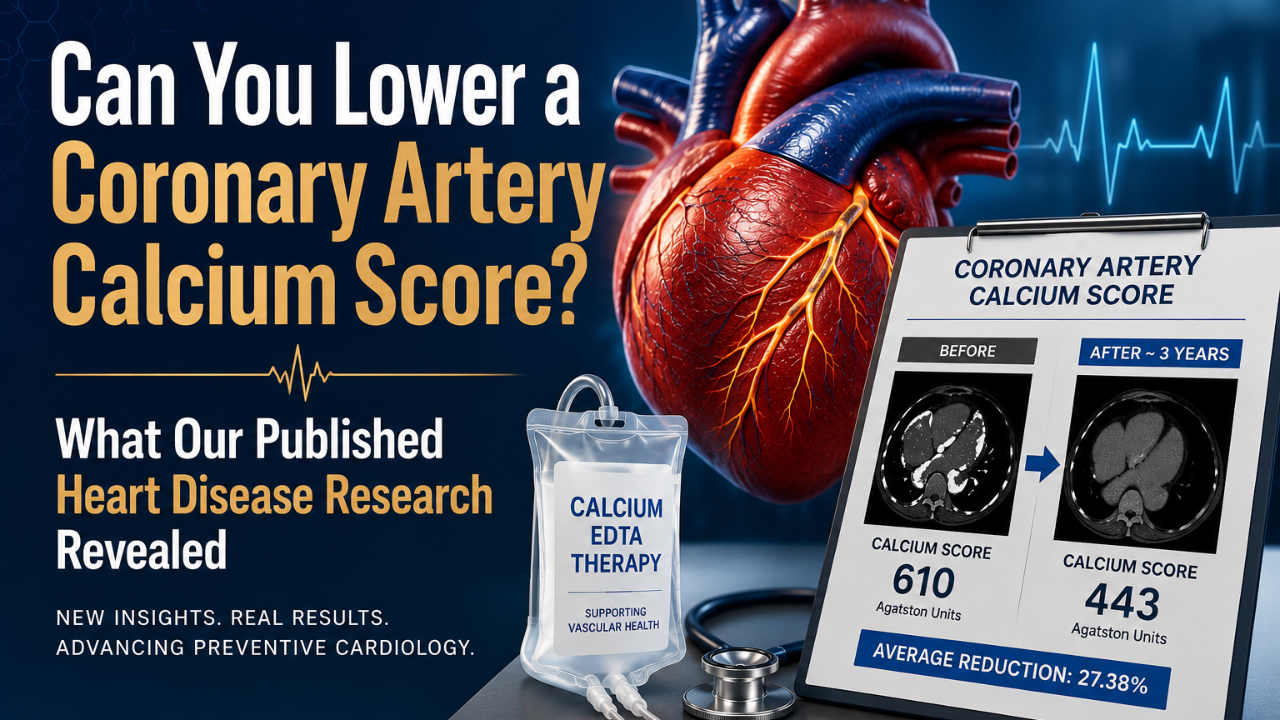
All patients in the study experienced a reduction in coronary artery calcium score between their initial and follow-up CT scans. Although the magnitude of improvement varied among participants, the direction of change was consistent across the study population. Instead of the commonly expected stability or increase in calcium scores, reductions were observed in every participant. The average coronary artery calcium score was 610 Agatston units, reflecting a population with a substantial burden of calcified coronary artery disease. Following treatment, the average score decreased to 443 Agatston units, representing an average reduction of 27.38%. Participants received an average of 26.9 intravenous calcium EDTA treatments over approximately 37.9 months, providing insight into the potential effects of long-term intermittent therapy rather than a short course of treatment.
Equally important were the outcomes that were not observed.
No adverse events were reported during the study, and there was no evidence of treatment-related complications requiring discontinuation of therapy. Safety is a critical consideration in any preventive intervention, especially those administered over several years. Although the study was too small to establish a comprehensive safety profile, the absence of reported adverse events was reassuring and consistent with previous experience using intermittent calcium EDTA therapy in carefully selected patients.
The study population was heterogeneous, with participants differing in age and presenting various cardiovascular risk factors, including hypertension, diabetes, obesity, and elevated baseline calcium scores. Despite these differences, reductions in coronary artery calcium scores were observed across the entire group, rather than being limited to a specific patient profile.
These findings demonstrate an association rather than proof of causation. As this was a retrospective pilot study without a placebo control group, it cannot be stated with certainty that chelation therapy alone was responsible for the observed reductions. Other factors, such as improvements in diet, exercise, medications, or overall cardiovascular risk management, may have contributed. Nevertheless, the consistency of the findings across all participants suggests that further scientific investigation is warranted.
From a research perspective, this outcome is particularly significant. For decades, coronary artery calcium has been regarded as a marker that remains stable or progressively increases over time. Observing reductions in every participant challenges this long-held assumption and raises an important question for future research: Is coronary artery calcification more dynamic and potentially more modifiable than previously believed?
While this study does not answer that question definitively, it provides encouraging preliminary evidence that it is a question worth asking.
Why These Findings Matter
For decades, coronary artery calcium has been viewed primarily as a marker of cardiovascular disease rather than something that can be meaningfully influenced. Physicians have used calcium scores to estimate a patient's future risk of heart attack, stroke, and cardiovascular death, but once an elevated score was identified, the conversation typically shifted toward managing traditional risk factors rather than attempting to change the score itself.
Multiple studies have demonstrated that lowering cholesterol, controlling blood pressure, improving diabetes management, and encouraging smoking cessation all reduce cardiovascular events. Yet despite these proven therapies, coronary calcium scores have generally been expected to remain stable or continue increasing over time. In other words, physicians have become very good at reducing risk while largely accepting coronary calcification as an irreversible marker of existing disease.
These findings challenge that assumption, not by disproving it, but by raising an important scientific question.
In this pilot study, every participant experienced a reduction in coronary artery calcium score following long-term intermittent intravenous chelation therapy, with an average reduction of 27.38%. While this does not establish a cause-and-effect relationship or prove that chelation therapy reduces cardiovascular events, it suggests that coronary calcification may be more dynamic than previously believed.
If these observations are confirmed in larger, randomized, placebo-controlled trials, the implications could be significant.
Rather than viewing coronary calcium scoring solely as a diagnostic tool that predicts future cardiovascular risk, physicians may eventually have additional strategies to actively influence the disease process itself. Preventive cardiology could evolve from asking, "How much disease is present?" to also asking, "Can we safely reduce that disease burden over time?"
Such a development would represent a significant shift in the approach to cardiovascular prevention. It is also essential to clarify what these findings do not imply.
This study does not demonstrate that chelation therapy reverses coronary artery disease, eliminates plaque, or prevents heart attacks. Nor does it suggest that patients should abandon established therapies such as statins, blood pressure management, smoking cessation, exercise, or dietary modification. Those interventions remain the cornerstone of cardiovascular prevention and have decades of evidence supporting their ability to reduce morbidity and mortality.
Instead, this study contributes to the expanding body of research investigating whether additional therapies may complement established standards of care. Scientific progress frequently begins by questioning long-standing assumptions. This research represents an initial step in that process and provides a foundation for future investigations into whether modifying coronary calcium scores can ultimately improve long-term cardiovascular outcomes.
From my perspective, the true significance of these findings lies in their potential to prompt reconsideration of what is possible in preventive cardiology. The objective was not merely to publish another study, but to explore whether prevailing assumptions should be re-evaluated. If future research confirms these observations, the field may progress beyond risk identification toward the development of new strategies aimed at reducing cardiovascular risk before adverse events occur.
Understanding the Limitations
A fundamental principle of rigorous scientific inquiry is the recognition of the limitations inherent in one's own research. Although the findings of this study are encouraging, they should be interpreted carefully and within the context of the study design. Scientific progress depends on asking important questions, but it also requires acknowledging when additional research is needed before firm conclusions can be drawn.
Several limitations should be considered.
This Was a Pilot Study
Our study was designed as a pilot investigation.
Pilot studies are designed to assess whether an observation warrants further investigation, rather than to provide definitive evidence of effectiveness.
The purpose of this project was to explore whether long-term intermittent intravenous chelation therapy might influence coronary artery calcium scores. The findings support further investigation, but they should not be interpreted as establishing a new standard of care.
Small Sample Size
The study included only 10 patients.
Small studies are valuable for generating hypotheses, but they have important statistical limitations. With relatively few participants, it becomes more difficult to determine whether the observed results would be reproduced in a much larger and more diverse population.
Notably, every participant demonstrated a reduction in calcium score. While this consistency is noteworthy, it underscores the necessity for replication in larger clinical trials before broad conclusions can be drawn.
Retrospective Study Design
This was a retrospective observational cohort study, meaning the investigators analyzed outcomes after patients had already completed treatment.
Unlike prospective randomized clinical trials, retrospective studies cannot control every variable that may influence outcomes. As a result, they are more susceptible to confounding factors that could affect the results.
For example, changes in diet, exercise, weight, medications, or other aspects of preventive care during the study period may also have contributed to the observed findings.
No Placebo Control
Perhaps the most significant limitation is the absence of a placebo group. Without a control group receiving identical follow-up but no chelation therapy, it is impossible to state with certainty that chelation alone was responsible for the reductions observed.
Randomized, placebo-controlled trials remain the gold standard for determining whether a treatment truly causes an observed effect.
Therefore, this study should be regarded as an important observation rather than definitive proof of causation.
Two Different Infusion Protocols
Patients in the study received one of two intravenous chelation formulations, based on the treating physician's clinical judgment. Both protocols contained calcium EDTA but differed in their accompanying micronutrients and antioxidants.
Because two protocols were used, the study cannot determine whether one formulation was more effective than the other or whether the observed changes were primarily related to calcium EDTA, the additional nutrients, or the combination of therapies.
Future research using a standardized protocol would help answer these important questions.
Variable Treatment Duration
Although patients were encouraged to receive approximately one infusion per month, real-world clinical practice is rarely identical from patient to patient.
Treatment frequency and duration varied based on individual scheduling, preferences, and adherence.
On average, participants received 26.9 infusions over approximately 37.9 months, but individual treatment courses differed.
Although this variability reflects real-world clinical practice, it introduces an additional factor that limits the ability to draw definitive conclusions.
Selection Bias
Another important consideration is the characteristics of the patients themselves.
The participants were not randomly selected from the general population. They were patients in a preventive medicine practice who actively sought to improve their health.
Most exercised regularly, paid close attention to nutrition, avoided smoking, and were highly motivated to reduce their cardiovascular risk.
These characteristics may restrict the generalizability of the findings to broader patient populations.
What This Study Was Not Designed to Measure
It's equally important to understand what this study did not evaluate. The primary endpoint was change in coronary artery calcium score.
The study was not designed or powered to determine whether chelation therapy reduced:
- Heart attacks
- Stroke
- Cardiovascular death
- Overall mortality
- Need for coronary interventions
Although no cardiovascular events occurred during the study period, the number of participants was far too small to draw meaningful conclusions about these outcomes.
Why Publish a Study With These Limitations?
Some readers may wonder why research with these limitations is valuable at all. The rationale is straightforward: scientific discovery often begins with preliminary observations.
Every major advance in medicine starts with observations that challenge existing assumptions. Early studies generate questions. Larger studies test those questions. Eventually, when enough evidence accumulates, clinical practice evolves.
Rather than claiming to have proven that chelation therapy reverses coronary artery disease, this study suggests that an important question deserves further investigation:
Is coronary artery calcification more modifiable than we have traditionally believed?
Answering that question will require larger, multicenter, randomized, placebo-controlled trials involving diverse patient populations. Until those studies are completed, the results presented here should be viewed as promising but preliminary evidence that contributes to an evolving field of preventive cardiology.
What This Does Not Mean
One of the greatest challenges in medical research is resisting the temptation to draw conclusions that extend beyond what the data actually support. Unfortunately, this is where many promising studies become misleading. A small study reports encouraging findings, headlines quickly proclaim a breakthrough, and before long, patients are led to believe that a new treatment has been proven effective when the evidence simply isn't there.
Although the results of this study are encouraging, they must be interpreted within the context of the measured outcomes. The purpose of this research was to explore whether long-term intermittent intravenous EDTA chelation therapy was associated with changes in coronary artery calcium scores, rather than to demonstrate a cure for cardiovascular disease or to suggest replacement of established therapies.
This Study Does Not Prove Chelation Cures Heart Disease
Heart disease is a complex condition involving atherosclerosis, inflammation, endothelial dysfunction, metabolic health, genetics, and lifestyle factors. Reducing a coronary calcium score, even if confirmed in future studies, would represent only one aspect of a much larger disease process.
Our study was not designed to determine whether chelation therapy cures coronary artery disease, eliminates plaque, or restores arteries to a normal state. Those conclusions cannot be made based on the available evidence.
This Study Does Not Prove Atherosclerosis Has Been Reversed
Another common misunderstanding is equating a lower calcium score with complete reversal of atherosclerosis. Atherosclerosis involves much more than calcium alone. It includes fatty plaque, inflammatory changes within the arterial wall, endothelial injury, fibrosis, and plaque remodeling.
Because a coronary calcium scan detects calcified plaque only, changes in the calcium score cannot fully describe what is happening throughout the artery. A reduction in calcification, although noteworthy, should not be interpreted as complete reversal of cardiovascular disease.
Chelation Therapy Is Not a Replacement for Proven Medical Therapy
Patients sometimes ask whether findings like these mean they can avoid statins, blood pressure medications, or other evidence-based treatments.
The answer is no. Decades of research have shown that appropriately prescribed statins, antihypertensive medications, diabetes management, smoking cessation, regular exercise, and healthy nutrition reduce the risk of heart attack, stroke, and cardiovascular death.
The findings of this study do not alter that established understanding. In fact, the published paper specifically states that intravenous chelation therapy should not replace established cardiovascular treatments. Rather, if future research confirms its benefit, chelation would likely be considered an additional tool that complements comprehensive cardiovascular prevention, not a substitute for it.
Not Every Patient With an Elevated Calcium Score Needs Chelation Therapy
Finding coronary calcification on a CT scan does not automatically mean that chelation therapy is appropriate.
Every patient is different.
The decision to pursue any treatment should take into account:
- Overall cardiovascular risk
- Symptoms
- Medical history
- Current medications
- Lifestyle factors
- Blood pressure
- Cholesterol
- Diabetes status
- Kidney function
- Patient goals and preferences
A coronary calcium score represents a single data point within the broader clinical context. Medical decisions should be individualized and not based solely on a single imaging test.
This Study Did Not Measure Heart Attacks or Survival
Perhaps the most important limitation is understanding what outcomes were actually studied.
Our primary endpoint was change in coronary artery calcium score.
The study was not designed to determine whether chelation therapy:
- Prevents heart attacks
- Reduces strokes
- Improves overall survival
- Decreases cardiovascular mortality
- Reduces the need for bypass surgery or coronary stenting
Those are critically important questions, but they require much larger clinical trials with long-term follow-up.
Until such studies are completed, it cannot be concluded that lowering a calcium score necessarily results in improved clinical outcomes.
What We Can Say
While it is essential to avoid overstating the findings, it is equally important to recognize their significance.
Our study demonstrated that every participant experienced a reduction in coronary artery calcium score following long-term intermittent intravenous EDTA chelation therapy, with an average reduction of 27.38%.
Those observations are scientifically important because they challenge a long-held assumption that coronary calcification is simply a one-way process that can only remain stable or worsen over time.
Whether these changes ultimately translate into fewer heart attacks, improved survival, or better long-term cardiovascular health remains unknown. Answering those questions will require larger, prospective, randomized clinical trials.
Until then, these findings should be regarded as encouraging evidence that justifies further research, rather than definitive proof that the issue has been resolved.
Frequently Asked Questions
Can a coronary calcium score ever go down?
Traditionally, calcium scores are expected to remain stable or increase over time. In our pilot study, all participants experienced a reduction in coronary calcium scores following long-term intravenous chelation therapy. Larger randomized studies are needed to determine whether these findings can be replicated.
Does a high calcium score mean I have blocked arteries?
Not necessarily. A high calcium score indicates the presence of calcified plaque but does not determine the severity of arterial narrowing. Additional testing may be appropriate depending on symptoms and overall clinical risk.
Can diet reduce coronary calcium?
A healthy diet supports cardiovascular health and may slow disease progression, but no specific diet has been proven to reverse coronary calcium scores.
Should everyone have a calcium score?
I believe the answer is affirmative for most adults beginning around age 40.
Heart disease remains the leading cause of death in both men and women, yet we often wait until patients develop symptoms before looking for evidence of disease.
From my perspective, this approach has not been optimal.
A coronary artery calcium (CAC) scan is one of the few tests that allows us to directly visualize calcified coronary artery disease before a patient experiences chest pain, shortness of breath, or a heart attack. Unlike cholesterol levels, blood pressure, or family history, which estimate risk, a calcium score provides evidence of whether coronary atherosclerosis is already present.
I have recommended calcium scoring in my practice for years, as I believe prevention should commence prior to the onset of symptoms. In fact, every patient included in our published study underwent calcium scoring as part of a proactive cardiovascular prevention strategy, not because they had known coronary artery disease or previous heart attacks.
A baseline calcium score can:
- Detect silent coronary artery disease before symptoms develop
- Help personalize cardiovascular risk
- Guide conversations about lifestyle and medical therapy
- Motivate patients to take prevention seriously
- Provide a baseline for future comparison when clinically appropriate
Not every 40-year-old will have coronary calcification. Many individuals will have a score of zero, which is reassuring and generally associated with a very low short-term risk of cardiovascular events. However, if calcium is present, I would prefer to identify it at age 45 rather than after a first heart attack at age 60.
Is chelation therapy FDA-approved for coronary artery disease?
No. Chelation therapy is not FDA-approved for preventing coronary artery disease or reducing coronary calcium scores. Our study specifically advises that it should not replace established therapies while further research is conducted.
Can I stop my statin if I receive chelation therapy?
No. Patients should not discontinue prescribed cardiovascular medications without consulting their physician.
Future Directions for Research
A key aspect of scientific research is that each study generates new questions. Our pilot study demonstrated a measurable reduction in coronary artery calcium scores following long-term intermittent intravenous chelation therapy.
The next generation of research should seek to answer several important questions:
- Can these findings be reproduced in larger, randomized, placebo-controlled trials?
- Which component of the infusion protocol contributes most to the observed changes?
- Does reducing coronary calcium translate into fewer heart attacks, strokes, or cardiovascular deaths?
- Which patient populations are most likely to benefit?
- How should chelation therapy be integrated with established preventive strategies?
Addressing these questions will require collaboration among researchers, clinicians, and patients. Until then, these findings should be considered encouraging but preliminary, providing a foundation for future investigation rather than a final conclusion.
Dr. Petteruti's Perspective
I have dedicated my career to prevention, which entails posing challenging questions before disease progression becomes irreversible.
This study was not intended to demonstrate that chelation is the definitive solution to cardiovascular disease. Rather, it was designed to challenge the prevailing assumption that coronary calcium scores inevitably progress and cannot be modified.
Science moves forward by testing those assumptions.
Whether future research confirms or refutes these findings, asking the question was worthwhile. I hope this work encourages further investigation into new approaches that complement, rather than replace, the therapies already proven to save lives.
About the Author
Dr. Stephen Petteruti, DO, is a board-certified physician specializing in preventive, functional, and longevity medicine. He is the author of the peer-reviewed study, "Reduction of Calcium Scores Using Intravenous Chelation: A Retrospective Pilot Study," published in Cureus in 2023.
Want to learn more?
If you're interested in preventive medicine, chelation therapy, hormone optimization, or personalized strategies to improve your long-term health, schedule a consultation with Dr. Stephen Petteruti or explore additional physician-written resources at Intellectual Medicine.
References
- Lincoff AM, Nicholls SJ, Riesmeyer JS, et al.: Evacetrapib and cardiovascular outcomes in high-risk vascular disease. N Engl J Med. 2017, 376:1933-42. 10.1056/NEJMoa1609581
- Ambale-Venkatesh B, Yang X, Wu CO, et al.: Cardiovascular event prediction by machine learning: the multi-ethnic study of atherosclerosis. Circ Res. 2017, 121:1092-101. 10.1161/CIRCRESAHA.117.311312
- Sandfort V, Bluemke DA: CT calcium scoring. History, current status and outlook. Diagn Interv Imaging. 2017, 98:3-10. 10.1016/j.diii.2016.06.007
- Shekar C, Budoff M: Calcification of the heart: mechanisms and therapeutic avenues. Expert Rev Cardiovasc Ther. 2018, 16:527-36. 10.1080/14779072.2018.1484282
- Budoff MJ, Young R, Lopez VA, et al.: Progression of coronary calcium and incident coronary heart disease events: MESA (Multi-Ethnic Study of Atherosclerosis). J Am Coll Cardiol. 2013, 61:1231-9. 10.1016/j.jacc.2012.12.035
- Shroff GR, Sanchez OA, Miedema MD, Kramer H, Ix JH, Duprez DA, Jacobs DR Jr: Coronary artery calcium progresses rapidly and discriminates incident cardiovascular events in chronic kidney disease regardless of diabetes: The Multi-Ethnic Study of Atherosclerosis (MESA). Atherosclerosis. 2020, 310:75-82. 10.1016/j.atherosclerosis.2020.07.026
- Andrews J, Psaltis PJ, Bartolo BA, Nicholls SJ, Puri R: Coronary arterial calcification: A review of mechanisms, promoters and imaging. Trends Cardiovasc Med. 2018, 28:491-501. 10.1016/j.tcm.2018.04.007
- Arad Y, Spadaro LA, Roth M, Newstein D, Guerci AD: Treatment of asymptomatic adults with elevated coronary calcium scores with atorvastatin, vitamin C, and vitamin E: the St. Francis Heart Study randomized clinical trial. J Am Coll Cardiol. 2005, 46:166-72. 10.1016/j.jacc.2005.02.089
- Schmermund A, Achenbach S, Budde T, et al.: Effect of intensive versus standard lipid-lowering treatment with atorvastatin on the progression of calcified coronary atherosclerosis over 12 months: a multicenter, randomized, double-blind trial. Circulation. 2006, 113:427-37. 10.1161/CIRCULATIONAHA.105.568147
- Escolar E, Lamas GA, Mark DB, et al.: The effect of an EDTA-based chelation regimen on patients with diabetes mellitus and prior myocardial infarction in the Trial to Assess Chelation Therapy (TACT). Circ Cardiovasc Qual Outcomes. 2014, 7:15-24. 10.1161/CIRCOUTCOMES.113.000663
- Petteruti S: Reduction of lead levels in patients following a long-term, intermittent calcium ethylenediaminetetraacetic acid (EDTA)-based intravenous chelation infusions: a prospective experimental cohort. Cureus. 2020, 12:e11685. 10.7759/cureus.11685
- Aneni EC, Escolar E, Lamas GA: Chronic toxic metal exposure and cardiovascular disease: mechanisms of risk and emerging role of chelation therapy. Curr Atheroscler Rep. 2016, 18:81. 10.1007/s11883-016-0631-0
- Lamphear B, Rauch S, Auinger P, et al.: Low-level lead exposure and mortality in US adults: a population-based cohort study. Lancet Public Health. 2018, 3:e177-e184. 10.1016/S2468-2667(18)30025-2
- Arad Y, Goodman KJ, Roth M, Newstein D, Guerci AD: Coronary calcification, coronary disease risk factors, C-reactive protein, and atherosclerotic cardiovascular disease events: the St. Francis Heart Study. J Am Coll Cardiol. 2005, 46:158-65. 10.1016/j.jacc.2005.02.088
- Lee SE, Sung JM, Andreini D, et al.: Differential association between the progression of coronary artery calcium score and coronary plaque volume progression according to statins: the Progression of AtheRosclerotic PlAque DetermIned by Computed TomoGraphic Angiography Imaging (PARADIGM) study. Eur Heart J Cardiovasc Imaging. 2019, 20:1307-14. 10.1093/ehjci/jez022
- Koulaouzidis G, Charisopoulou D, Maffrett S, et al.: Progression of coronary artery calcification in asymptomatic individuals with pre-existing calcium score. Int Angiol. 2013, 32:327-331.
Ready to take the next step? Schedule your one-on-one consultation with Dr. Stephen Petteruti
Get exclusive insights every month
We hate SPAM. We will never sell your information, for any reason.
Author