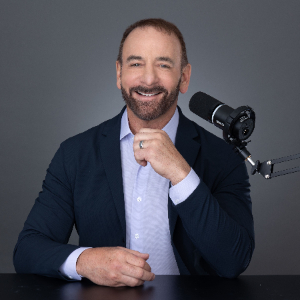
What’s the End Game? Rethinking Prostate Cancer Screening and Strategy

Prostate cancer conversations usually start with a test and end with a procedure.
PSA rises.
A biopsy is ordered.
Treatment is recommended.
But according to Dr. Stephen Petteruti, almost no one stops to ask the most important question first:
Where is this path actually leading?
In this podcast, Dr. Petteruti challenges the foundation of modern prostate cancer screening and treatment by asking men to think beyond the next test and consider the long-term outcome of every decision.
If the end result is loss of vitality, function, and independence—without a proven survival benefit—then the strategy deserves re-examination.
The uncomfortable truth about prostate cancer
Autopsy studies tell a story few men hear in the doctor’s office.
A significant percentage of men over 50 have cancer cells in their prostate.
By age 90, most men do.
Yet the majority never suffer harm from those cells.
Dr. Petteruti introduces a concept that reframes the entire conversation: atypical dormant cells. These cells may exist for decades without progressing, spreading, or threatening life. Labeling them as aggressive cancer—and treating them as such—may be one of medicine’s biggest missteps.
How did we get here?
In the mid-1800s, prostate cancer was considered rare.
Today, it is labeled common and dangerous.
Dr. Petteruti walks listeners through how evolving diagnostic tools—rather than changing biology—have driven that shift. PSA testing, biopsy culture, and procedure-based medicine created momentum without ever proving improved outcomes.
Even more concerning, definitive treatments became standard before modern imaging, before outcome studies, and before long-term data existed.
When that data finally arrived decades later, the results were sobering.
When treatment does not improve survival
Large, long-term studies comparing surgery, radiation, and no treatment found no meaningful difference in prostate cancer death rates after 15–20 years.
What did differ was harm.
Urinary incontinence.
Erectile dysfunction.
Cognitive decline.
Cardiovascular risk.
Dr. Petteruti explains why calling these therapies “curative” is misleading—and why language matters when men are making irreversible decisions.
Why biopsy deserves a pause
Prostate biopsy is often described as routine.
It is not.
Dr. Petteruti explains why biopsies cause pain, bleeding, infection, and psychological harm—and why the information they provide rarely changes long-term outcomes. Once tissue is labeled “cancer,” fear takes over, even when evidence does not support intervention.
He challenges the logic of repeatedly puncturing a gland when no test—not PSA, not biopsy, not Gleason score—can reliably predict which cancers will ever become aggressive.
The danger of treating numbers instead of people
One of the most powerful sections of the podcast addresses PSA paranoia.
PSA is a risk marker, not a death sentence. Rising numbers do not correlate directly with mortality. Yet men are often subjected to escalating treatment based solely on lab values, not symptoms or outcomes.
Dr. Petteruti explains why suppressing PSA at all costs often leads to androgen deprivation therapy—and why chemical castration produces guaranteed harm without guaranteed benefit.
Fatigue.
Muscle loss.
Weight gain.
Depression.
Memory impairment.
Loss of sexual function.
These are not rare side effects. They are predictable consequences.
Why fear is the wrong driver
Throughout the episode, Dr. Petteruti returns to one central theme: regret.
Men rarely regret living well.
They often regret rushing into treatment they did not fully understand.
There is no perfect path. There are no guarantees. But decisions made under fear tend to carry the heaviest cost.
The conversation is not over
This episode deliberately stops short of providing a full alternative protocol.
That is intentional.
In the next discussion, Dr. Petteruti outlines what a thoughtful, biology-driven strategy looks like—one that avoids unnecessary harm while still addressing risk.
If you’ve ever been told there is only one responsible path forward, this conversation matters.
If you value clarity, autonomy, and quality of life, it matters even more.
Watch the full podcast:
What’s the End Game? Rethinking Prostate Cancer Screening and Strategy
Sometimes the most intelligent decision in medicine is not what you do next—but what you choose not to do.
Ready to take the next step? Schedule your one-on-one consultation with Dr. Stephen Petteruti
Get exclusive insights every month
We hate SPAM. We will never sell your information, for any reason.
Author