What It Means When Your PSA Is Rising (And What Doctors Usually Look For)

Recent research by the American Cancer Society shows that 1 in 8 men will be affected by prostate cancer in their lifetime. This is higher than you might think, particularly for a disease that often goes undetected.
The good news is that a rising PSA does not always mean something serious is happening. Here's what a rising PSA means and what doctors consider before taking action.
What is a PSA Number?
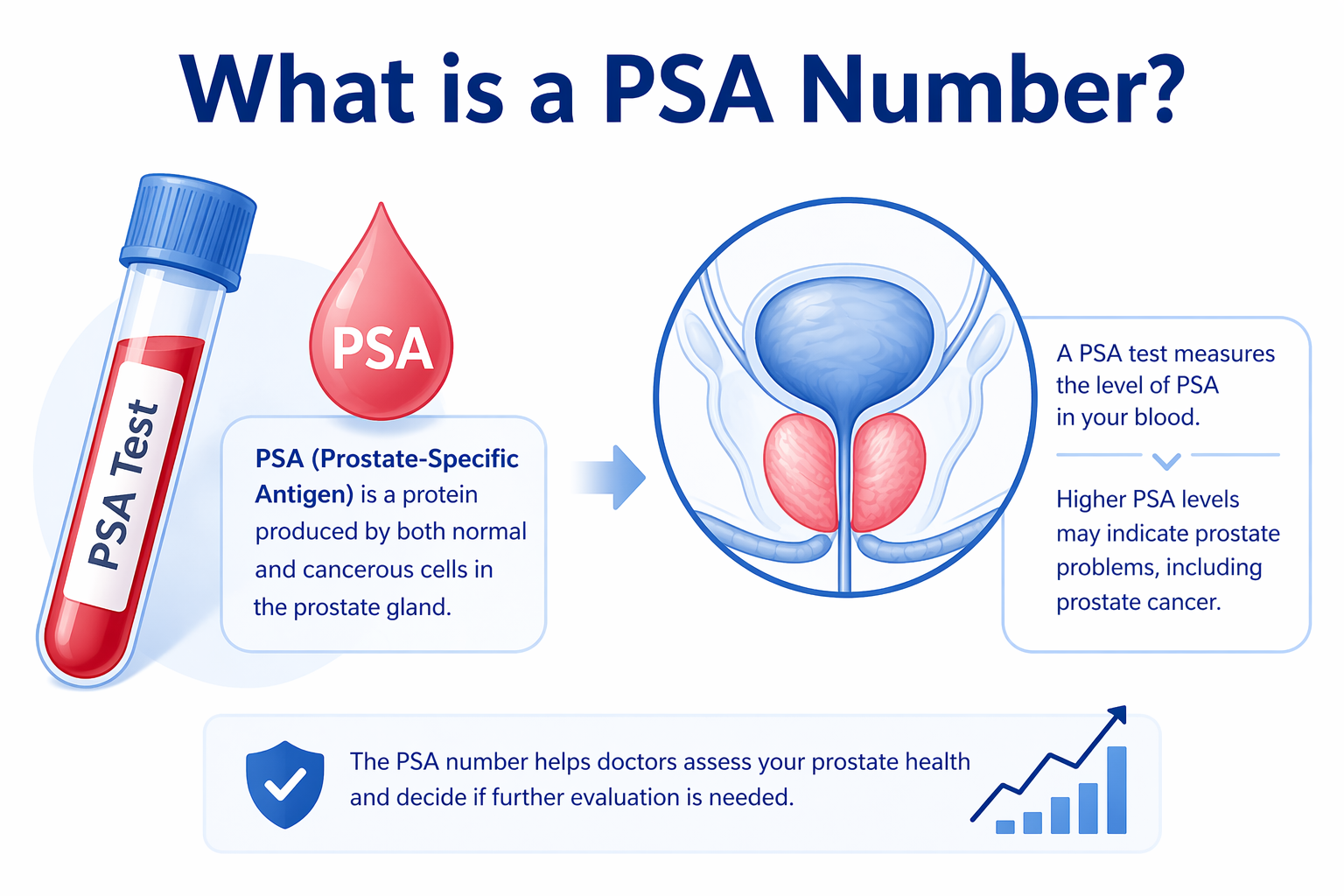
A PSA number is the outcome of a blood test which measures the amount of prostate-specific antigen (PSA) in your body. It's a protein made by the prostate gland and naturally enters the bloodstream.
The test provides a straightforward method of evaluating the prostate. It results in a number that can be used to monitor changes.
PSA is expressed in units of nanograms per milliliter (ng/mL). It uses a single number, which can change depending on the prostate's health. That's why the test is often done several times to track any changes.
Does a Rising PSA Mean Cancer Is Getting Worse?

An increasing PSA doesn't necessarily mean your cancer is progressing. An increase can be due to normal factors including growth of the prostate as you get older, inflammation (swelling), infection or even exercise. These fluctuations may occur without being a sign of anything serious, so a single reading is not always clear-cut.
To interpret the result, doctors might use age-specific levels because the prostate enlarges with age. For men 40-49 years old, up to 2.5 ng/mL. For ages 50–59, up to 3.5 ng/mL. For ages 60–69, up to 4.5 ng/mL. For ages 70–79, up to 6.5 ng/mL. So you have to interpret an increase in PSA correctly.
For instance, if you're 52 years old and your PSA rises from 2.7 ng/mL to 3.0 ng/mL after a few months, your PSA has gone up, but it's still a normal level for your age. In this situation, you don't need to worry about the change.
That's why doctors examine changes over time. They look at the trend in the number and may use other tests, such as an MRI to get a better understanding of what is going on before they make the decision.
4 Ways to Respond to a Rising PSA

A rising PSA is not something most men wish to deal with, but it is sadly a reality they would have to face. The way you manage an elevated PSA in the early stage can shape what happens next.
To handle a rising PSA the right way from the start, focus on these key steps:
1. Repeat the Test Before Taking Action
Before making decisions about a high Prostate-Specific Antigen (PSA) test, many doctors will repeat the test. PSA levels may fluctuate for various reasons, so it's not an accurate indicator when tested only once.
That's why a second test is required. A large number of elevated PSA results do not persist. Research has found that 22-25% of men with an elevated PSA will have a normal PSA on their second test. This helps decrease the chance of overdiagnosis and unnecessary treatment resulting from false positives.
When to do the follow-up test is also crucial. This is usually 3-8 weeks later. Prior to the test, a man should avoid certain activities to ensure a better result, including ejaculation and vigorous exercise like cycling for at least 48 hours.
A persistently high PSA test result is more likely to be consistent. Then it's time for further work-up. So there's no reason to make any decision based on just one test.
2. Look at the Pattern Over Time
Once the test has been repeated, we are interested in the pattern over time. You can have two tests and see that the number has changed, but it does not show a pattern. After a few months of several tests, a pattern emerges.
Doctors base decisions on this pattern. They look at how fast the number is rising, known as PSA velocity, and how long it takes to double. A slow and steady increase over time is usually handled differently from a sharp rise within a short period.
A PSA that rises once and then stays around the same level is not treated the same as one that continues to increase across three or four tests. It is also common for PSA levels to move up and down before settling, which is why time is allowed to observe the trend.
3. Use Imaging to Get a Clearer Picture

When the PSA level and trend are not sufficient to make a decision, we need to take a look at the prostate. Blood tests reveal that something has changed, but not where. Imaging is used to provide that missing detail.
Multiparametric MRI is currently being used extensively because it provides a detailed picture of the prostate without radiation. It is able to highlight areas that may require attention and also highlight when the structure is normal. In many cases, this helps separate harmless changes from findings that require closer monitoring.
This approach can help move to a decision-making process based on observation, rather than measurement alone. If the MRI is not showing any features of concern, it may be able to help avoid having to do an invasive procedure right away. This allows us to not "put the horse before the cart" while still keeping it under close watch.
4. Avoid Rushing Into Treatment
You may be tempted to rush into action if your PSA is rising, but your reaction should be based on the results. Treatment comes in different forms, and knowing what to ask your doctor when your PSA is high can guide that early talk. Some are basic, supportive changes to your lifestyle, while others are medical treatments, and sometimes more drastic measures. Decisions should be based on your results, not emotions.
Supportive options provide an opportunity to learn more about the problem. Healthy diet, exercise, sleep and stress management can help your body as you continue to monitor your PSA. These are simple to follow and do not preclude future options.
Treatment to treat your prostate cancer should only be considered if there is persistent and consistent evidence from tests and scans. These options can have lasting effects, so timing is important. Being cautious will prevent you from making a decision too soon.
Conclusion
A rising PSA can feel urgent, but it helps to slow down and understand what the result shows before making any decision. When you take the time to look at the full picture, it becomes easier to avoid unnecessary steps.
Doctors use guidelines to guide care, but they still work with limited information at each stage. This is why your role in the process is important. Asking clear questions helps you understand why a test or treatment is being suggested and what the possible outcomes are.
If a recommendation feels too fast or too aggressive, it is reasonable to pause and ask for more clarity. Taking this approach keeps you involved and helps you make decisions that are based on understanding rather than pressure.
Ready to take the next step? Schedule your one-on-one consultation with Dr. Stephen Petteruti
Get exclusive insights every month
We hate SPAM. We will never sell your information, for any reason.
Author