Testosterone Isn’t Low by Accident
No one has ever come into Dr. Stephen Petteruti's office asking for less energy, smaller muscles, more fatigue, or lower drive. Men and women value testosterone because it supports vitality, strength, mood, cognition, and resilience.
The real question is not whether testosterone matters. It’s why so many people are losing it and what actually restores it.
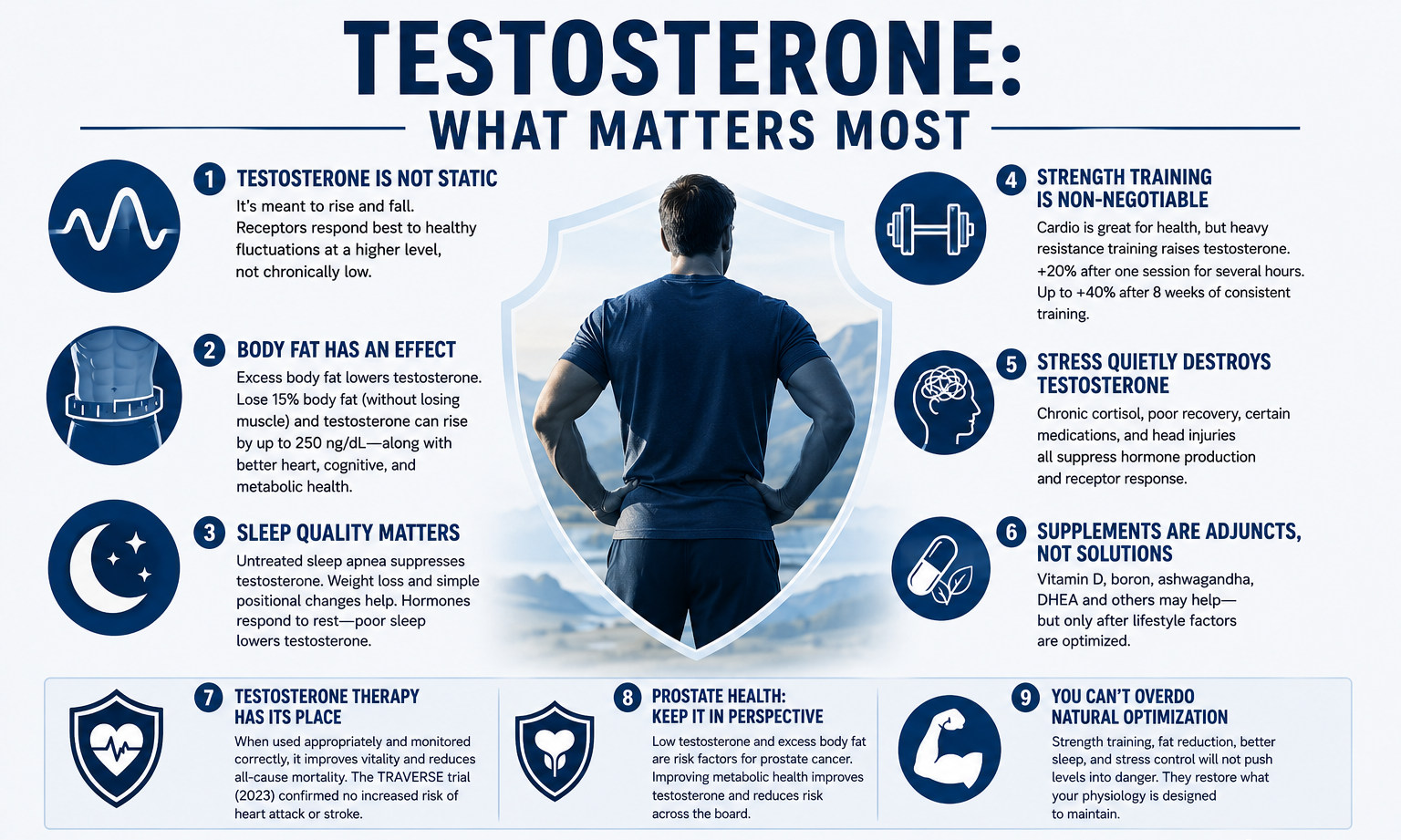
Testosterone is not static
It is meant to rise and fall. Receptors respond best when hormone levels vary, not when they are flat and suppressed. What matters is that those fluctuations happen at a higher level, not a chronically low one. That applies whether you are producing your own testosterone or using therapy. The body thrives on dynamic balance.
Body fat has an effect
Before talking about supplements or prescriptions, the most powerful driver of testosterone needs to be addressed: body fat.
Excess adiposity lowers testosterone through multiple mechanisms. Reduce body fat by fifteen percent without sacrificing muscle, and testosterone can rise dramatically.
In some men, levels increase by as much as 250 nanograms per deciliter. Alongside that come lower blood pressure, reduced cardiac risk, and improved cognitive health. This is not cosmetic. It is biological.
Sleep quality matters just as much
Untreated sleep apnea suppresses testosterone. Fixing it often restores levels. Weight loss helps. Simple positional changes can help. What does not help is pretending poor sleep has no consequences. Hormones respond to rest. If sleep is broken, testosterone follows.
Strength training is another non-negotiable
Cardiovascular exercise has benefits, but it does not meaningfully raise testosterone. Heavy resistance training does. One session can raise testosterone by twenty percent for several hours. Consistent training over eight weeks can raise baseline levels by up to forty percent depending on where you start. This is one of the most reliable tools available.
Stress quietly destroys testosterone
Chronic cortisol suppresses hormone production and receptor response. Antidepressants and anxiolytics often worsen the problem. Head injuries do as well. Testosterone loss is not random. It is the predictable outcome of modern living layered with poor recovery.
Only after lifestyle factors are addressed do supplements enter the conversation
Vitamin D has evidence of benefit when levels are optimized. Boron may help modestly. Ashwagandha reduces stress, which indirectly supports testosterone. DHEA can be useful, particularly for women. These are adjuncts, not solutions.
Testosterone therapy has its place. Used appropriately and monitored correctly, it improves vitality and reduces all-cause mortality.
The TRAVERSE trial published in 2023 confirmed no increased risk of heart attack or stroke when testosterone is properly prescribed. Fear around cardiovascular risk no longer holds up. What matters is competence and oversight.
Men worry about prostate health. They are told testosterone is dangerous The data does not support that fear.
Low testosterone is a risk factor for prostate cancer. Excess body fat is a risk factor. Improving metabolic health improves testosterone and reduces risk across the board.
You cannot “overdo” natural testosterone optimization. Strength training, fat reduction, better sleep, and stress control will not push levels into danger. They restore what your physiology is designed to maintain.
In the end, this comes down to choice. You can accept fatigue, weakness, and decline. Or you can participate in your health. Energy comes from movement. Vitality comes from effort. Testosterone follows action.
We are not here forever. We may as well live with strength, clarity, and purpose.
Ready to take the next step? Schedule your one-on-one consultation with Dr. Stephen Petteruti
Get exclusive insights every month
We hate SPAM. We will never sell your information, for any reason.
Author