Can Prostate Cancer Be Cured If Caught Early?
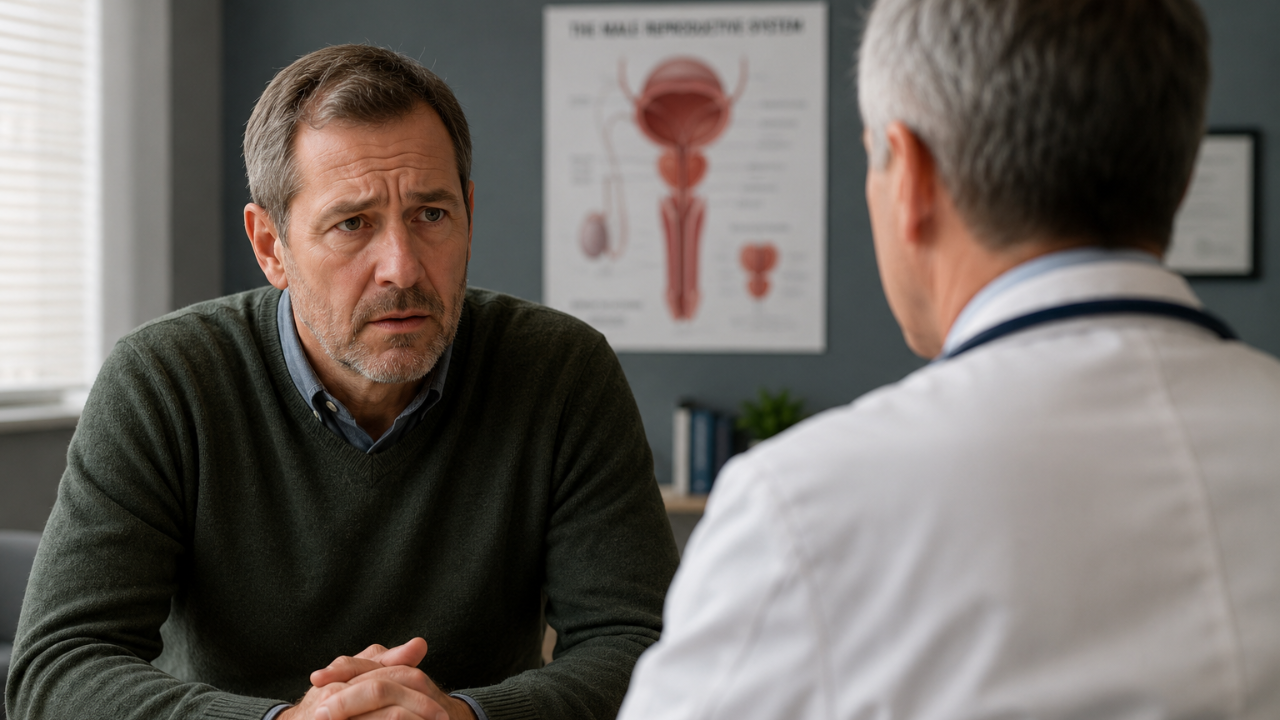
Prostate cancer can often be treated successfully when it is found early. In fact, prostate cancer that is still confined to the prostate or nearby tissues has a nearly 100% five-year relative survival rate. This means that most men diagnosed at this stage are still living five years later, and many go on to live long, healthy lives.
Here’s what influences life expectancy with prostate cancer and why many men never die from the disease. You’ll also learn how to protect your quality of life while making treatment decisions.
5 Factors That Influence Life Expectancy With Prostate Cancer
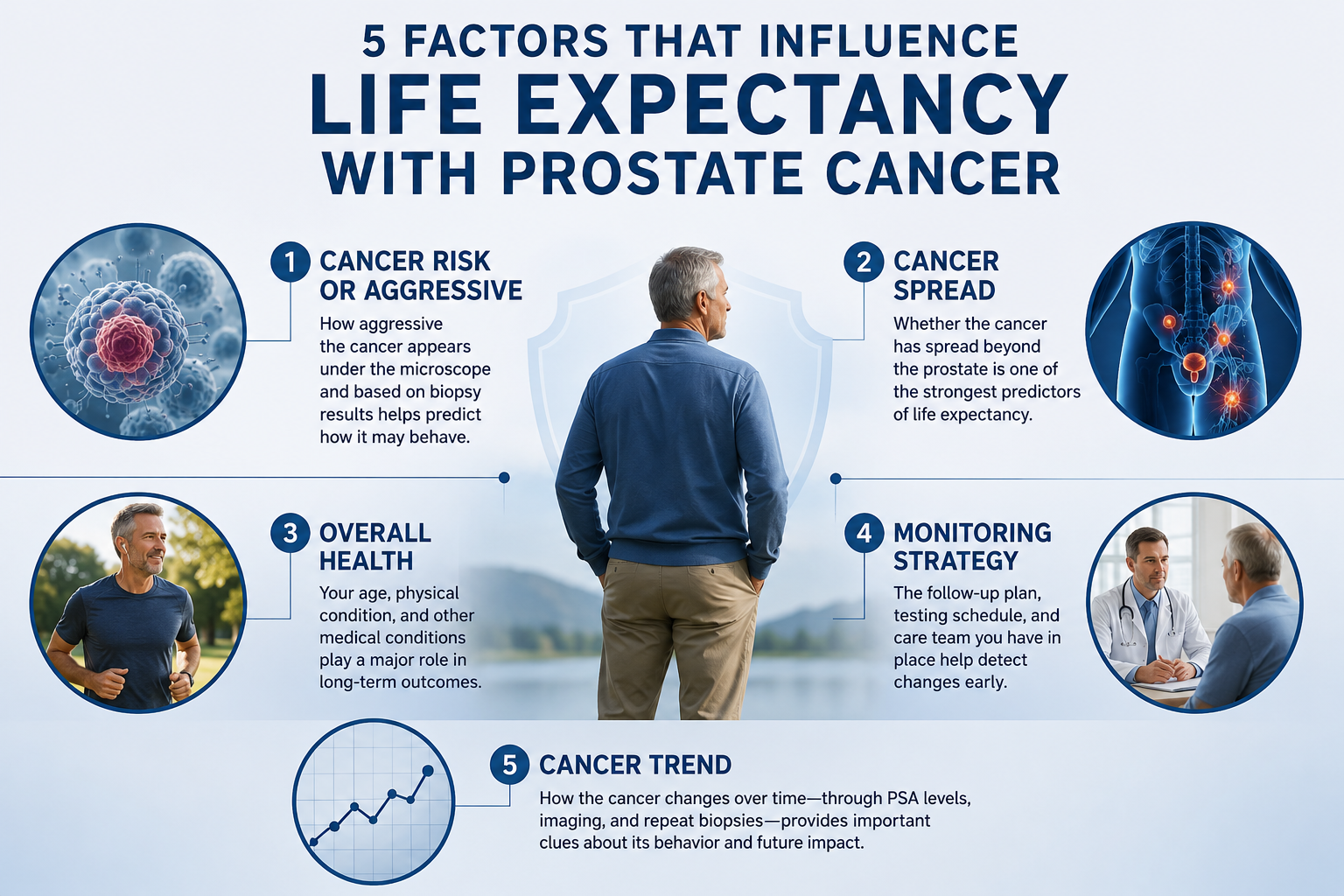
Life expectancy with prostate cancer depends on much more than the diagnosis itself. Many men live for decades after they are diagnosed, and some never experience serious complications from the disease.
Here are some factors that explain why one man's experience can look very different from another's:
1. Whether the Cancer Is Low-Risk or Aggressive
One of the most important factors is how the cancer appears under the microscope and how likely it is to grow over time. Some prostate cancers are classified as low-risk, which means they tend to grow slowly and may never become life-threatening. Others have features that suggest a higher chance of spreading or causing problems if left unchecked.
In daily practice, this distinction shapes almost every subsequent decision. A man with a low-risk diagnosis may live for many years without symptoms and may never require immediate treatment. A man with a more aggressive form may need closer monitoring and a more active approach.
This is why two men with prostate cancer can hear very different recommendations, even when they are diagnosed around the same time. The biology of the cancer often provides the clearest indication of how it is likely to affect life expectancy.
2. Whether the Cancer Has Spread Beyond the Prostate
Another major factor is whether the cancer is still confined to the prostate or has spread to nearby tissues or distant parts of the body. When prostate cancer is found early and remains localized, long-term survival rates are extremely high. This is one of the main reasons early detection can create so many options.
Once the cancer spreads beyond the prostate, the outlook becomes more complex. Treatment can still be very effective, and many men continue to live for years, but the condition often requires more intensive management. This difference explains why staging is such an important part of the evaluation process. It helps doctors understand how far the cancer has progressed and what strategies are most appropriate.
In general, the more contained the cancer is at the time of diagnosis, the greater the opportunity to maintain both longevity and quality of life.
3. Your Age and Overall Health
Your general health plays a significant role in how prostate cancer is managed and how it may affect your future. Two men with the same diagnosis can have very different outcomes depending on their physical condition, medical history, and how well their bodies can tolerate treatment or long-term monitoring.
A younger man in good health may have more treatment options and a greater capacity to recover if treatment becomes necessary. An older man with heart disease, diabetes, or other chronic conditions may face different considerations.
In some cases, these other health issues are more likely to influence life expectancy than the prostate cancer itself. This is why treatment decisions are never based on the diagnosis alone. Doctors look at the full picture, including energy, mobility, and overall resilience, to determine what approach offers the best balance between longevity and day-to-day well-being.
4. The Treatment or Monitoring Strategy You Choose
The approach you take after diagnosis can also influence long-term outcomes. Some men benefit from active treatment, while others are better served by careful monitoring. The most appropriate strategy depends on the cancer’s risk level and the individual’s priorities. But no matter the outcome, you should always consider vitality.
For low-risk prostate cancer, active surveillance allows doctors to monitor the condition closely while avoiding unnecessary side effects. This approach can preserve urinary function, sexual health, and daily independence for many years. When treatment is needed, the timing and type of treatment can affect both survival and quality of life.
Decisions made too quickly may expose men to complications such as erectile dysfunction or urine leakage, which could have been avoided. A thoughtful strategy, based on clear evidence and consistent follow-up, often leads to better long-term results than acting out of fear immediately after diagnosis.
5. The Cancer Trend
Life expectancy is influenced not only by the diagnosis and treatment plan, but also by how consistently the condition is followed over time. Prostate cancer is not a static condition. The picture becomes clearer as PSA levels, imaging, and other findings are reviewed over months and years.
Regular monitoring allows changes to be detected before they become more serious. For men on active surveillance, this process provides reassurance when the cancer remains stable and allows timely action if the situation changes. Even after treatment, follow-up helps confirm that the cancer remains under control.
Men who stay engaged, attend appointments, and ask clear questions are often in a stronger position to make informed decisions as new information becomes available. In many cases, steady and careful monitoring is what transforms uncertainty into a well-managed, long-term condition.
Can You Live a Long Life With Prostate Cancer?

Yes, many men live a long life with prostate cancer. A recent report shows that around 80 out of every 100 men diagnosed with prostate cancer survive for 10 years or more, and outcomes are often even better when the cancer is found before it has spread. In many cases, the disease grows slowly enough that it never becomes the main threat to a man's life.
How long you live depends largely on the type of prostate cancer you have, whether it is still confined to the prostate, and your overall health. Some men require treatment, while others can be monitored closely for years without immediate intervention. This is why a diagnosis does not automatically mean your life will be cut short.
Many men eventually die from unrelated causes rather than from prostate cancer itself. When the condition is evaluated carefully and managed with the right strategy, it is often possible to protect both longevity and quality of life. The most important step is to understand how your specific cancer is behaving before making decisions based on fear.
How to Protect Quality of Life After a Prostate Cancer Diagnosis
Protecting your quality of life after a prostate cancer diagnosis begins with one decision: do not agree to any treatment until you understand how much it is expected to help and what it may take away. Urinary control, sexual function, energy, physical strength, and daily independence can all change after treatment. Once these changes occur, some may be difficult to reverse.
Before agreeing to any treatment, here are five important questions that directly affect how you will live after diagnosis:
- How much is this treatment expected to improve my outcome?
The benefit should be clear and supported by evidence specific to your situation.
- What is the risk to urinary control?
Even mild leakage can affect sleep, travel, work, and confidence.
- What is the risk to sexual function?
Erectile dysfunction can have a lasting effect on intimacy and emotional well-being.
- Is careful monitoring a reasonable option?
Some prostate cancers can be observed safely for years without immediate treatment.
- How will this affect my energy, strength, and independence?
The quality of your remaining years is just as important as the number of years themselves.
The best decision is the one that balances survival with the ability to continue living well.
Conclusion
A prostate cancer diagnosis often creates more options than most men realize. Many prostate cancers grow slowly, and some never become the main threat to a man’s life. The most important decisions are usually the ones made after there is a clear understanding of how the cancer is behaving and what each option is likely to change.
Living longer and living well deserve equal consideration. This principle guides much of the discussion at Intellectual Medicine and reflects a broader view of prostate cancer care. The strongest decisions are those that protect both survival and the quality of the years ahead.
There are also extended notes and resources that break this down further, along with ongoing discussions around lifestyle, recovery, and long-term health decisions.
👉 Join here: https://tinyurl.com/DrPetterutiMember
You can also explore the broader framework behind this approach in Fight Cancer Like a Man, where these ideas are explained in more detail.
👉 https://tinyurl.com/FightLikeAManBook
Thanks for reading! Subscribe for free to receive new posts and support my work.
Ready to take the next step? Schedule your one-on-one consultation with Dr. Stephen Petteruti
Get exclusive insights every month
We hate SPAM. We will never sell your information, for any reason.
Author